-
Joseph French
This post is part of a pilot student project created for the University of Florida class, Raising History from the Grave: Primary Historical Research in Literary Analysis and Public Humanities taught by Dr. Leah Rosenberg. The students focused on members of the Black Caribbean diaspora who worked on the Panama Canal or in the Canal Zone, the U.S. territory that surrounded the Panama Canal for much of the 20th century. These employees were originally classified as Silver employees because they were paid in silver currency as opposed to the Gold employees who were American citizens paid in gold currency. The term is still used today by both the community and scholars. The students worked with Pan Caribbean Sankofa, a community organization dedicated to preserving the history of Caribbean people in Panama, who identified community leaders as subjects for the project. Students consulted a wide array of archival materials in the Panama Canal Museum Collection and other institutions and learned how to use these resources to highlight individual accomplishments and connect lives to their larger communities through the digital humanities. For other posts, see Raising History from the Grave.
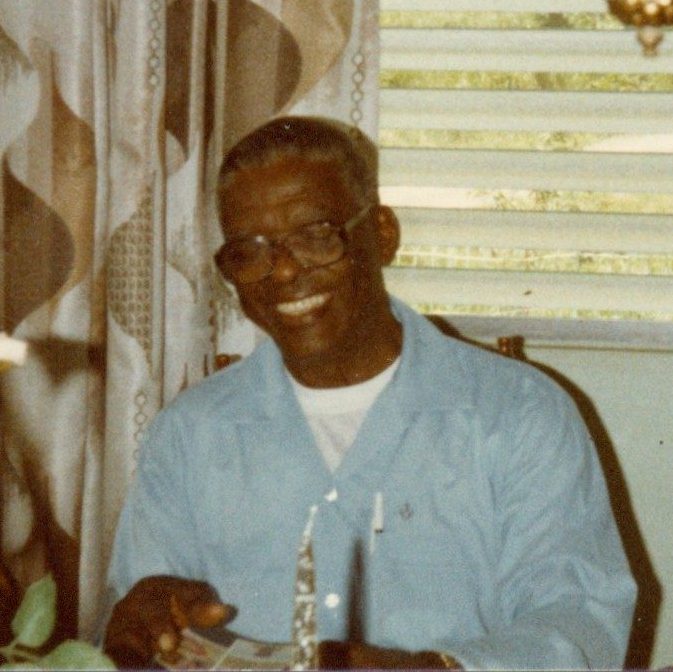
Photo from the Gamboa ‘Silver Town’ Reunion website. https://gamboa.domains.uflib.ufl.edu/gallery-item/mr-french/ 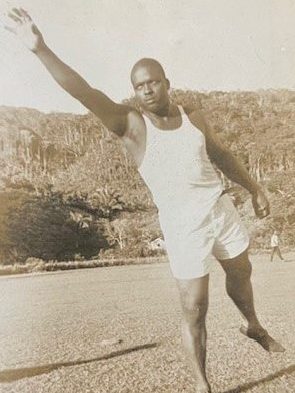
Mr. French practicing his shotput. Gift of the French Family. II.2024.25.19 Why We Remember
Joseph French spent most of his career in the Panama Canal Zone townsite known as Gamboa or Santa Cruz. The community uses both names to reference their beloved hometown as well as a few other nicknames, ‘Gambo’ and ‘Gyambo’. As the city grew larger, a tight-knit and loyal community blossomed. In 1936, the relocation of the Panama Canal’s dredging division from Paraiso to Gamboa was an important moment in the expansion and development of the town. A larger population meant robust infrastructure, schools, community centers; and of course, leaders. Joseph French embodied a leader in every aspect of his character. His many years of teaching, coaching, and uplifting the community of Gamboa have left an unrivaled legacy. His integrity, compassion, and work ethic live on in those he touched, and serve as an inspiration for those familiar with his character.
Interview with Innis, Rex. Conducted by Gamboa Reunion Group. 2014.
An oral interview with Innis Rex references a “Mr. French,” as one of Gamboa’s leaders; he is likely referring to Joseph French.
An oral interview with Innis Rex references a “Mr. French,” as one of Gamboa’s leaders; he is likely referring to Joseph French. Both the interviewer and Mr. Innis explain that living in Gamboa was like being part of one big family where everyone looked after each other. The interviewer interjects to say, “that in a sense we were all children to almost everybody, all the big people. I mean, we had our direct parents, we might have had our biological parents, but we had a sense of caring and parenthood throughout the community.” This statement again reinforces the idea that Gamboa was an incredibly tight knit community and that Mr. French was one of its prominent leaders.
If you’re interested in listening to the entire oral history or reading the transcript, please click here.
Interview with Cornelius Gilling. Conducted by Gamboa Reunion Group. 2014.
Click here to read more from an interview with Cornelius Gilling, a Gamboa Resident. Mr. Gilling provides details about what the environment of Gamboa was like.
When asked about what it was like to move to Gamboa from Paraiso, Gilling replied “we were right in the middle of the jungle”. The interviewer replied “Middle of the jungle?” to which Gilling said “But, it was made out like a city. Remember? We didn’t have to worry about anything. We had the [inaudible]. We got the clubhouse, we got the ship, we got the school.” The interviewer said “So it was a good place to live?” and Gilling said “Exactly. Everything was perfect.” This shows how important schools and the social aspect of living in Gamboa were, and both of these things are areas that Mr. French had an impact on as a teacher and a coach.
If you’re interested in listening to the oral history or reading the transcript, please click here.
Firefighting
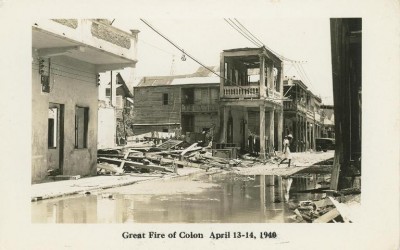
We know that Joseph French started his time as a firefighter in the city of Colon in 1935. As he didn’t switch careers until 1941, it is likely that he was present for the great fire of Colon in 1940. 10,000-12,000 people lost their homes in this devastating fire. The New York Times described the firefighters as a “small army.” Was Mr. French among them?
Scenes from Colon, Panama After Fire. Panama Canal Museum Collection. Gift of Joy Maale, 2000.011.001.003
Interview with Homer Welch. Conducted by Gamboa Reunion Group. 2014.
In an interview with Mr. Homer Welch, Mr. Welch speaks about the difficulties in finding work outside of employment related to the Panama Canal, and how it was very difficult to get a job as a fireman. This helps us understand some of the struggles that Mr. French may have gone through in his career as a firefighter. Through this story, it is clear that leaders such as Mr. French helped children across Panama towns achieve better lives.
If you’re interested in listening to the entire oral history or reading the transcript, please click here.
Interview with Cedric Gittens. Conducted by Pan Caribbean Sankofa. 26 August 2020.
Click here to read about this interview with Cedric Gittens. Mr. Gittens talks about how he had worked in Silver City as a store man (someone who took cargo from box cars as they arrived at storage and then broke them down into units before shipping them to commissaries). He later became a firefighter, and he details the physical work that went into the job as well as the racial hierarchy that existed within the Fire Department at that time.
We know that Mr. French worked as a firefighter for at least a while (although the length of his firefighting career remains unknown to us), so this interview is helpful in furthering our understanding of what Mr. French’s experience was probably like during his time serving the Fire Department and what struggles he likely faced while working there. Moreover, Mr. Gittens’ explanation of what it was like living in Silver City provides us broader insight into the community atmosphere.
If you’re interested in listening to the entire oral history or reading the transcript, please click here.
Interview with Theophilus Peterkin. Conducted by Gamboa Reunion Group. 2014.
Click here to read about this interview with Mr. Theophilus Peterkin. It gives us a glimpse into what it was like becoming a firefighter in Gamboa and, in a similar manner to Mr. Gittens, describes a racial hierarchy that existed within the Fire Department.
“I always thought, if you can get a job, take a job. I was lucky enough that I got a job at the Fire Department and that was like a success story.” Talking about what the job was like, he said “They’re gonna make it tough for you. The white man is not going to be happy about you taking jobs from the white man. That’s the white chief telling all this. He says, they’re going to call you n*, they’re going to call you son of a bitch, they’re going to call you asshole, call you all this stuff. He says that is allowed by our standards. The standard is to belittle the black man. If you can put up with that, take the job. We took it, we put up with all that stuff. And the white people were a little taken aback because they figured black people, what they hell did they know, you know? But then when there were fires, we performed better than the white man himself. And the thing about a white man is that when they go to fire, they walk away from it. And then the quartermaster, what they used to call the quartermaster. How would you call it now, in America? Clean up crew. They were sent a crew to clean up. The white fireman put out a fire and they’re done. But with us, when we put out a fire, we were the clean-up. [Inaudible]. And we did a better job than the guys with the quartermaster. White people began to appreciate us, and they started putting in a good word for us.”
Teaching and Coaching

Mr. French, 1949. Gift of the French Family. II.2024.25.25 
Gift of the French Family. II.2024.25.28.2 
Gift of the French Family. II.2024.25.28.1 
Mr. French with the archery team. Gift of the French Family. II.2024.25.21 
Mr. French with the girl’s basketball team. Gift of the French Family. II.2024.25.23 
Mr. French with the soccer team. Gift of the French Family. II.2024.25.20.1 
Mr. French (center). Gift of the French Family. II.2024.25.20.3
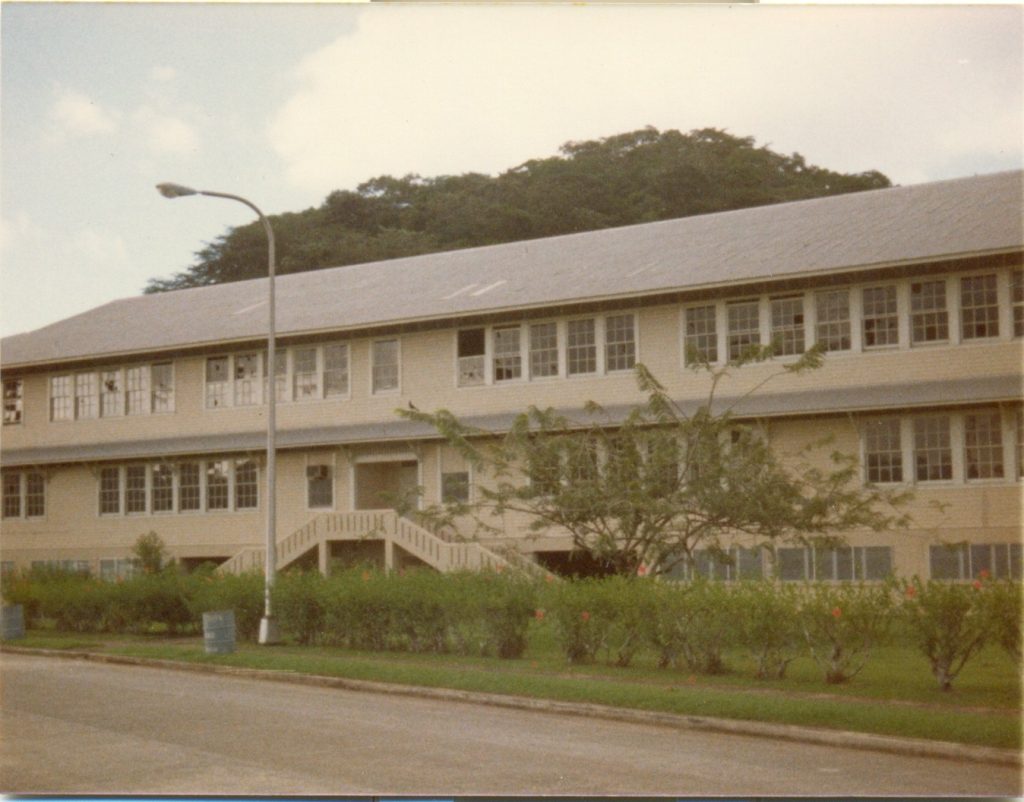
In 1941, French began to serve his community in a new way: he became an instructor of physical education in the Canal Zone Schools. Mr. French was, at this point, a renowned athlete in his own right. He represented Panama for Track in the Central American and Caribbean Games in 1938 and 1946. French was a gym instructor at Santa Cruz K-12, but he coached many sports teams in his free time.
Santa Cruz Elementary School, circa 1975. Photo courtesy of Gamboa ‘Silver Town’ Reunion website.
As a coach, French discovered a new outlet of community outreach: sports. Thus, French’s day-to-day life changed when he became an instructor and coach, but he remained focused on improving his community.
French directed several organized sports leagues in the early 1950s and encouraged many successful careers in sports. French coached many young athletes who would eventually travel to the United States to play Major League Baseball. His significance as a coach is resounding; he created a sports infrastructure that encouraged many youths to become stars. According to the Baseball Almanac, 10% of Panamanian-born MLB players were from the ‘Silver Town’ of Gamboa. The Baseball Almanac is the official baseball history website, and it can be accessed here.
Interview with Earl Holder. Conducted by Gamboa Reunion Group. 2014.
Click here to read more about this oral history with Earl Holder, who played for the Detroit Tigers. He tells of his experience as part of the first class of the Gamboa schools. When asked about the games that he played as a kid, he said that he always loved baseball.
“When I came up in my—during teenage years, I played everything. Basketball, baseball,
track and field, softball. The only thing that I never did participate in was soccer. Because I really didn’t
know that soccer was a game that has these techniques. I thought you just kick the ball and run down
and kick the bill. I didn’t understand that game – kick the ball, running behind, and kicking, and so on.
Baseball was my love. That was my love, baseball. Baseball, see? Because I remember – my team from
the major league, the Detroit Tigers – I remember when I retired, it brought tears to my eyes when they
presented me a large eight-by-ten photo with the then-manager of the Detroit Tigers, Sparky Anderson.
They told him about me, I’m an ardent Detroit fan, and he sent me a big autographed photograph and
wished me well on my retirement, so on and so on, some time ago. And so, but I remember at my
retirement, when they handed me the keys, I couldn’t help it, I just broke into tears.”This interview emphasizes the influence that baseball had on the community of Gamboa, and thus how important Mr. French’s impact was on the community.
If you’re interested in listening to the entire oral history or reading the transcript, please click here.
Interview with Theophilus Peterkin. Conducted by Gamboa Reunion Group. 2014.
Click here to read more from an oral history with Mr. Theophilus Peterkin. Mr. Peterkin doesn’t reference Mr. French directly, but he does talk about how important baseball was to the community.
Mr. Peterkin named many memorable players, demonstrating how decades later sports continues to be an important part of his memory of Gamboa.
“Gamboa was a unique, a very unique community. In the sense that everybody—people like a family. One family, it was just one family. Like I said, you fight today and tomorrow you’re shaking hands. You’re hugging and kissing and sitting and drinking beer, and eating an ice cream. Gamboa was so unique. All the Canal Zone holidays, the picnics were held in Gamboa. Every one. Because Gamboa had everything in one place.”
This interview is paramount in our understanding of how important baseball was to those living in the community and thus how Mr. French impacted the community of Gamboa, and more specifically, the sports community. Mr. French’s success in teaching young athletes who went on to become professionals is reflective of his incredibly impressive coaching abilities. Mr. Peterkin was also a fireman, which allows us to have a better idea of what Mr. French’s time as a firefighter might have been like.
If you’re interested in listening to the entire oral history or reading the transcript, please click here.
Rod Carew
To Rodney Carew, Mr. French was so much more than a coach; he was a guardian. Long before his successful Major League Baseball career, Mr. Carew was a victim of domestic violence. In his memoir One Tough Out Mr. Carew describes his relationship with Mr. French. He was an uncle, a coach, and a father figure whom Carew could actually trust.
Mr. French confronted Carew’s father, Eric, about the boy’s injuries. He wasn’t able to stop the beatings, but he was able to provide the fathering that he knew this boy deserved.

“Mr. French made sure I was at school every day and that I was doing my homework. If my tattered clothes failed to cover the scars on my back or legs, he found a shirt or pants to help me maintain some dignity. On days when boys went shirtless in gym, Mr. French allowed me to keep my shirt on to hide my welts. This only traded one issue for another; now I was the only boy wearing a shirt. Still, I gladly drew looks for that rather than endure the shame and embarrassment that would come from revealing my bruises. There would be more mentoring by Mr. French, but these were the sad circumstances that brought us closer.” – Rod Carew
Image: Rod Carew made 18 All Star teams in a 19-year career. Louis Requena/MLB Photos/Getty Images.
As Mr. Carew got older, French played an instrumental role in making the most of his athletic talent.
“A decathlon champion in his youth, he [Mr. French] knew the traits of a good athlete. He found them in the scared, scarred son of his wife’s sister, the boy he was already keeping an eye on. In what became the first boost for my career, he signed me up for Little League.
My parents couldn’t afford the fee, so Mr. French made a deal with me: I would have to work it off. As the gym teacher at Gamboa High School, he also was in charge of maintaining the field. I had to help him by removing rocks, painting fences, and such. The better I played, the more he let me treat my chores with the intensity of Tom Sawyer and the fence he was supposed to be painting.
Right away, I drew attention for hitting more frequently and more forcefully than anyone else, my age or older. Parents from other teams accused me of being older than 12. Mr. French taught me to treat this as a compliment.” – Rod Carew
Image: Associated Press


“Once I was clearly the best player in Gamboa, Mr. French took me to other parks around the Canal Zone to see how I stacked up against other kids my age and older. Then we sought action throughout the interior of Panama.
The only time Eric came to a Little League game, I had three hits, two of them home runs. He showed no reaction to any of those. But after I made an error in the field, he was in the dugout waiting for me when the half-inning ended. He put his meaty hand around my throat and tried lifting me. Mr. French saw and screamed, “Take your hands off that boy!” He let go and I gagged, gasping for air.”- Rod Carew
Image: Time Magazine, July 18, 1977.
Carew’s story demonstrates the multi-faceted nature of Mr. French’s impact on the community. He wasn’t just a great coach, but a fierce protector and an empowering presence.
One of his former students who played on the women’s basketball team, ‘Gyambo Girls’ recalls Mr. French Fondly. Photo from the Gamboa ‘Silver Town’ Reunion website.

“He went beyond the ‘authority’ of the Canal Zone ‘Silver/Local Rate’ governance to secure physical training equipment (usually ‘hand me downs’ from ‘Gold/U.S. rated’ schools) for Gyambo kids. And he was more often than not successful in negotiating with Panamanian private enterprises to sponsor local teams that competed in sports events throughout the Republic’s terminal cities and surrounding towns. It was a badge of honor to qualify to make his teams. Making meant that you met his criteria for personal character, discipline and sportsperson skills. Many of us will remember that he bought an old truck, remodeled it with back seat benches to carry local teams wherever he could ‘negotiate’ a friendly competition with locals and bring us safely back home. He widened our horizons beyond the limited plane of ‘Gyambo’s isolation.”
Community Work
Interview with Sylvia Perryman. Conducted by Gamboa Reunion Group. 2014.
Click here to read more from an interview, Ms. Sylvia Perryman as she details her memories of the Gamboa community.
Ms. Perryman talks about how everyone acted as family to each other and looked after others’ children, recounting specific anecdotes about conflict resolution, housing, and difficulties of having family working in the Canal Zone.
“I like Gamboa. It was—to me it was like a home…A home with a home. Because the neighbors look out for you and your kids. They don’t think that their kid’s better than that and, I mean, used to go fighting with them, but still they love each other.”
Ms. Perryman’s stories about the Gamboa community provides broad insight into what Mr. French’s impact may have been like and how this impact lives on in his legacy.
If you’re interested in listening to the entire oral history or reading the transcript, please click here.
Throughout his years teaching and coaching the children of Gamboa, Mr. French also volunteered his time to social organizations that bettered the communities he lived in. In 1966, he served as the President of the Santa Cruz Social Welfare Council. A Panama Canal Spillway article describes a leadership workshop French organized for volunteers to advocate for and help them become more active members of their communities. There was also a Language Tutoring workshop in 1971 that Mr. French helped develop. Mr. French organized this workshop in partnership with the Gamboa Baptist Church, and it was open to all students. This workshop aimed to help children obtain the individual attention they needed to increase their reading, writing, and oral skills in both Spanish and English. All profits made from this workshop were reinvested in the schools.
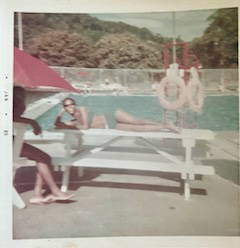
These are just two instances of the many recorded organizations Joseph French was personally involved with. French had a commitment to fostering strong and supportive civic organizations. French advocated to build the first gymnasiums and swimming pools for the residents of Gamboa to enjoy. These small acts portray just how active and involved he truly was within his community.
The image on the left was shared by Vilma Nesfield. She is seen at the swimming pool where Mr. French taught kids to swim. And fondly remembered that “he was always there to rescue us…if we were in trouble. Good old days!”
Interview with Arthur Wade. Conducted by Gamboa Reunion Group. 2014.
Click here to read more from In an interview with Mr. Arthur Wade. Mr. Wade talks about the tight-knit community in Gamboa and how it was really the people that made the place. There was a profound sense of pride and respect for others that radiated through the community that Mr. French was such an influential leader of. Wade asserts that the values community members learned in Gamboa have traveled with them as they have moved to the United States and elsewhere.
“I would say we had one of the best close communities there. People encouraged you, man. People – they took advantage of the opportunity that we were – we had a proud community, let’s face it. Our parents and our forefathers were hard working, and they were – The kids, we grew up with a lot of respect for our family. I would think, to me, the heritage and respect and work ethic and, I would tend to think, encouragement. I would think Panama – Gamboa – was a town of family, decency, and caring, and people were close-knit. I would think that is one of the things we can say. We weren’t neglected.”
In many of the comments on Mr. French’s photos and community maps posted by the Gamboa Reunion Group, it is said in some way or another that for parents in Gamboa, it took this entire village to raise their children. Stories like that of Mr. Wade amplifies our understanding of the culture, dynamic, and community values of Gamboa.
If you’re interested in listening to the entire oral history or reading the transcript, please click here.
Joseph French Honored for his Community Work

Gift of the French Family. II.2024.25.32 
Gift of the French Family. II.2024.25.32 
Gift of the French Family. II.2024.25.32 
Gift of the French Family. II.2024.25.32 
Gift of the French Family. II.2024.25.32 
Gift of the French Family. II.2024.25.32 
Gift of the French Family. II.2024.25.32 
Gift of the French Family. II.2024.25.32
Joseph French received the Meritorious Son award on August 18th, 1977. He is shown in the picture above receiving the award from Panama City Mayor Diomedes Concepcion. Joseph French won the award for his efforts in molding baseball stars such as Rod Carew and Rennie Stennet. City Council awarded him a scroll during his ceremony.
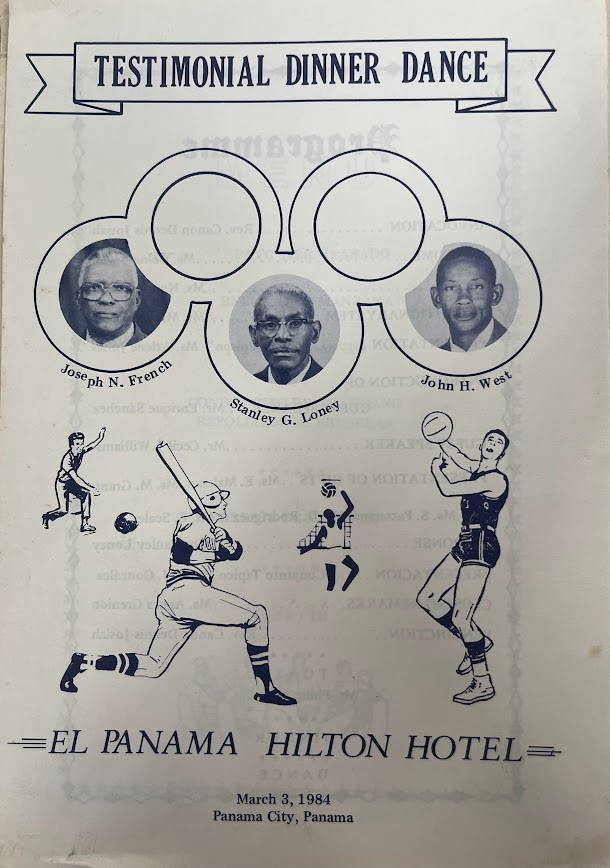
On March 3rd, 1984, Joseph French was honored at a Testimonial Dinner Dance at the Panama Hilton Hotel along with two others, Stanley Loney and John West. El Republica published an article in their newspaper advertising this event to the public. Joseph French and the other two community leaders were “being honored in recognition of their contribution to the growth and development of youngsters in the various Canal Zone communities for a combined total of over 100 years.” This dinner was put on by the young people these leaders impacted. They wanted to show their appreciation for all the work and effort these men put into their lives.
Program. Gift of the French Family. II.2024.25.34

Gamboa/Santa Cruz bleachers. Gift of the French Family. II.2024.25.6.3 On a local level, the Gamboa Schools honored him with their own field day when he retired. On May 25th, 1984, the school held a field day to honor Mr. French. They played softball, basketball, bridge, quadrille dancing, and many other activities to Corregimiento de Ancon in Paraiso. This event gathered proceeds from refreshment sales to donate to Centro Medico de Paraiso and the Pedro Miguel-Paraiso Nursery in Mr. French’s name.
Inteview with Leatha and Louis Sprauve. Conducted by Gamboa reunion Group. 2014.
Click here to read more from an interview with Leatha and Louis Sprauve. Mrs. Sprauve said “Gamboa was unique. Everybody look out for each other’s child. You couldn’t get away with nothing in Gamboa.”
Later in this interview, Mrs. Sprauve directly speaks about Mr. French and the impact that he had on the community, particularly youth sports. She says, “I would say [who] helped keep us off the streets was Mr. French with his involvement…of every sport. Every sport come in and teams were formed to keep us busy, like it or not, you know. That gym was never closed… He worked it eight hours and he stayed there. He formed four teams – Front Square, Church Square, Dust Bowl, and Parallel, volleyball teams. And we had the volleyball team going and get the trophy—we got the trophy for [inaudible], you know, you get
something like that.” Mr. Sprauve says Mr. French “dedicated his whole life.”This statement reinforces the fact that Mr. French offered community guidance to the youth. He steered them in directions that followed their talents and dreams.
Without men like Joseph French, children like Leatha and Louis Sprauve may have had a different path in their lives. Testimonials like hers continue to show the influence that French had over the children in Gamboa and the Canal Zones to receive such high praise and admiration from his community.
If you’re interested in listening to the entire oral history or reading the transcript, please click here.
An Enduring Legacy
The process of researching Joseph French was itself inspiring. As we acknowledge the legacy that French created, we are inspired by his unshakable commitment to his community. Extending respect, compassion, and attention towards others is important, and few figures are more emblematic of that than Joseph French.
Thank you to Mr. French’s family for sharing materials about his life with the class so that we could learn about the tremendous impact he had on the community.
You May Also Like

George Stratford Seymour Cockburn


