-
Rose N. Grimes
This post is part of a pilot student project created for the University of Florida class, Raising History from the Grave: Primary Historical Research in Literary Analysis and Public Humanities taught by Dr. Leah Rosenberg. The students focused on members of the Black Caribbean diaspora who worked on the Panama Canal or in the Canal Zone, the U.S. territory that surrounded the Panama Canal for much of the 20th century. These employees were originally classified as Silver employees because they were paid in silver currency as opposed to the Gold employees who were American citizens paid in gold currency. The term is still used today by both the community and scholars. The students worked with Pan Caribbean Sankofa, a community organization dedicated to preserving the history of Caribbean people in Panama, who identified community leaders as subjects for the project. Students consulted a wide array of archival materials in the Panama Canal Museum Collection and other institutions and learned how to use these resources to highlight individual accomplishments and connect lives to their larger communities through the digital humanities. For other posts, see Raising History from the Grave.

Setting the Scene
The year is 1905. A young girl sits on a crowded boat – one of the only girls amid a myriad of young men chatting enthusiastically about the journey ahead. They speak of gold, work, and wonder about what lies ahead in “Panama.” To the girl, it all sounds like a dream – leaving her family, friends, and the only life she’s ever known to travel over 1300 miles across the open waters to this mysterious place … “Panama.”
For the men around her, it’s a country bursting with opportunity and riches – or at least that’s what they had been told. But what about the young girl? No recruiters had come knocking at her door, flashing shiny gold coins with promises that she, too, could earn this wealth. The ship’s horn bellows, jolting the girl from her musings. She lifts her gaze and sees that the ship has begun to depart, the shores of Grenada shrinking smaller into the horizon. She watches intently until it disappears from view, a silent farewell to her past life. Finally, she turns her back from the receding horizon and looks to the future and the new life awaiting her in Panama.
This is likely what Rose Nickles Grimes faced as she entered the Panama Canal Zone. She was a woman whose work and contributions to the development of the Panama Canal had been lost to time – until now.

Arrival at Cristobal of S.S. Ancon with 1500 Laborers from Barbados, Deck Scene, September 2, 1909. Panama Canal Museum Collection. Gift of George R. and Marion Goethals. II.2024.12.132 Introduction
The voices and histories of Black women in the Panama Canal Zone are among the many that have been lost to time. For decades, the glory of the canal was reserved for America, a feat that launched the country towards its status as a world power. Only in recent times have the stories of the West Indian men who built the canal begun to be told, but women’s voices are still missing from the narrative. Behind the image of young and spry men laying the foundation for what is considered to be one of the “Seven Wonders of the Modern World,” were the women who laid the foundation for it all. Our team of three undergraduates has been researching Rose Nickles Grimes, a woman who moved to the Canal Zone from Grenada in 1905.
Her personal narrative, a document telling her story in first person as dictated to a granddaughter Valina, provided us with key facts about her life, such as her young years working as a midwife in Grenada, her marriage to Samuel Grimes, and her experience as a Black woman and mother in the Canal Zone. This narrative is the source for many of the facts provided here and gave us a jumping off point that led us to understand the broader context of the way West Indian women were essential to this American project. The many times we reference events from her life we are pulling information from this document. In this case what was not recorded told our team more than the records we did find about women. Most of the primary sources from the Canal Zone were written by men and focused on the male workforce. When women were mentioned, they were washerwomen, homemakers and healers. West Indian women were rarely mentioned. When they were, it was as low-level service provider, washerwomen, homemakers, and “maids.” The white U.S. government officials in the Canal Zone clearly saw West Indian women as of no importance. Yet, as Joan Flores-Villalobos argues in her book The Silver Women, West Indian women like Rose made it possible for the Canal to be completed by providing necessary labor and goods to the West Indian men workers and to the white U.S. employees and their families. They supported everything behind the scenes. Without West Indian women the Canal could not have been completed. The Black women white government officials and their wives looked down on were the backbone of the Canal’s creation.

St. George showing Fort George from Council Chamber, Grenada, West India Island. 1895. Early Years – Grenada, Traditional Healing and Spirituality
Rose was born in Grenada, during a period of widespread migration. Starting with the emancipation that occurred in Grenada in 1838, many people were looking to leave their past behind and search for a better life. Migration trends changed over the years, and “between 1885 and 1920, their preference was for Cuba, the Dominican Republic, and Central America and Panama” (Phillip). This shows a broader trend of migration. For Rose, the push factor was her dad leaving to go to Panama to work on the canal when she was 14 years old. Then, in 1905, when Rose was 19 years old, her father called for her, feeling as though she could make more money in Panama. She was excited to finally get to go out and explore something away from home, and was on her way to Panama within six months.
Traditional healing practices and spiritual beliefs were also prevalent throughout the country in which Rose was raised. Based on scholarly studies of healing practices in Grenada and on her family’s oral histories, we know that these cultural experiences throughout her early life had a big impact on who she was as a person throughout her early life. In Grenada, healing practices often intertwine with strong spiritual beliefs. Patsy Sutherland’s article “Traditional Healing and Spirituality Among Grenadian Women” reveals that in Grenada, healing is not merely a physical act; it is also deeply intertwined with spiritual practices and beliefs. Sutherland looks at the major beliefs concerning healing across all of Grenadian history. She summarizes her holistic approach with the insight that healing is about bringing balance to the body, mind, and spirit, using what the earth provides. The article also discusses the reverence often held towards ancestors and their wisdom. Sutherland’s findings help to explain the profound significance of Rose’s healing practices for her family and community. This knowledge, combined with the work she did as an apprentice to a doctor, led to her developing the skills necessary to become the village midwife.
Much of the documentation we have on midwifery in the late 1800’s and early 1900’s are in the form of books on rules and regulations. This is an indication that government officials were in the process of pushing women out of this important medical profession and establishing doctors, usually men and often white, as the only legal providers of childbirth health care. Thus, an article from The Lancet titled “America’s triumph in Panama Three Years’ Medical and Sanitary Record in the Canal Zone” shares how “Miss B.M. Broadwood, honorary secretary and director of the Cottage Benefit Nursing Association, said that in starting the association she was advised of the undesirability of introducing certificated midwives into the country who might be tempted to take the place of medical men” (Leigh).

Another example of this type of regulation is the 1911 Executive Order issued by canal authorities that banned the practice of midwifery without proper licensing. Thus, whether medical men were ‘losing job opportunities’, they wanted to exert more control over the potential midwives of the community, or even just for sanitary concerns- this change would have directly impacted Grimes’ future.
Panama Canal Record, 1941. V. 1-34, no. 9; page 154
Rose continued to use her healing knowledge to treat her family and community despite these prohibitions. She used a lot of natural ingredients from the land to create remedies, as was more common back then. Additionally, she taught these skills to her children and grandchildren, and so her family went most of their lives without needing to go to the doctors. Her descendant, Art Walker, discusses these practices as he shares Grimes’ deep influence on his mother, and the lasting impact she has had on his life as his great-grandmother.
As for her spiritual beliefs, Rose did not believe in going to church. However, she did regularly invite the local priest over to discuss religious matters with him. She was very spiritual, though she did not identify with any particular religion. Art Walker discusses this further in this additional clip from his oral history:
You can view the entire interview here: https://ufdc.ufl.edu/AA00082255/00001/videos

Departure of laborers from Barbados for the Panama Canal Creating a New Life in the Panama Canal
Arriving at the Canal Zone at just 19 years old, Rose faced a difficult task: finding a job. In Grenada, Rose had been trained as a midwife and was confident in her abilities. However, as she went door to door offering her skill to potential employers, they simply laughed in her face. Unless she redid her entire education, Rose was out of luck for work in her sole profession. This was a grim reality Rose and many other educated Black women faced in the canal. She needed work, and quickly. With options severely limited, Rose settled on work as a laundress.
Many Black women in the Panama Canal found work in the service industry – often, this was the only valid route of employment available to them. Yet, once they overcame the hurdle of securing employment, they encountered an even greater challenge: racism, discrimination, and mistreatment. Joan Flores-Villalobos’ book, The Silver Women: How Black Women’s Labor Made the Panama Canal, details such issues. Unsurprisingly, Black women often found work in the hands of wealthy, White American employers, filled with the ignorant misconceptions of people of color they had carried with them from the States. A recipe for disaster, Black women were often overworked, underpaid, and under-appreciated, but their work was vital for the construction of the Canal and the laundering industry was no exception.
Laundry services in the Canal Zone held critical significance for several reasons. For one thing, they were imperative for maintaining the health and hygiene of workers in a tropical environment plagued by diseases like malaria and yellow fever. Clean and dry clothing helped prevent the spread of illness among the workforce, ensuring a safer working environment. It also provided comfort and boosted morale amidst the challenging conditions of the construction site – hot, humid, and miserable weather.
While laundry seems a simple task, The Silver Women highlights the physicality involved. Unlike today, washing machines were a rarity. So, women were often seen washing other people’s clothes by hand, using soap and water in basins or tubs, or washing by rivers. This was highly frowned upon by White women and used as another reason to belittle Black women. Although the exact details of Rose’s experiences in this toxic environment are unknown, she faced many of the challenges associated with it.
Nevertheless, Rose persevered through low pay and arduous labor for two years until 1907, when she found a job at a bakery. In 1911, Rose met a man named Samuel Grimes. Described by Rose as a tall and handsome man, Samuel had recently moved from Barbados – one of the thousands of young men who flocked to the Canal Zone in search of work. In fact, Samuel was one of the pioneering Barbadians to enlist in the Canal workforce, as the recruitment station in Barbados was established in 1905, just one year before his arrival. After two years of courting, the couple married and moved in together. Soon after, they had their first children, and following the customs of the time, Rose quit the bakery and began the arguably more demanding job of a wife and mother – child rearing, cooking, and cleaning were just a few of the responsibilities she had to take on.
Establishing a Home in Paraiso
Rose’s family likely called Paraiso home between 1919 and 1936. The date she moved to the town is unclear, but her husband was working in the area by 1919. There are no further records after 1936 tying her to Paraiso. The family of Rose informed us that by late 1936, Samuel and Rose were able to buy acres of land and build a home in a small town called Chilibre (information provided by Carmen Grimes Eccles). Below is pictures of Samuel Grimes’ request for metal check issue, an application for photo metal check and a picture of the Pedro Miguel Post Office, where Samuel applied for his metal check.
Rose’s family likely lived in Paraiso because of her husband’s job in the town of Pedro Miguel. Pedro Miguel was home to a large set of locks on the Pacific side of the Canal used to keep ocean liners and container ships moving through the Canal. In the 1920 census, his job is listed as “Machine Helper.” According to Samuel’s metal check from February 1919 he worked with the Municipal Engineering Department as an Artisan “C”, earning 24 cents an hour. He was about 32 at the time. The Workman says Artisans are, “employees performing the duties of shop, building, construction, and other machines and artisans.“ It covers positions like blacksmith, molder, painter, drill runner, lineman, printing, carpenter, machinist, and mason. Samuel must have been trained and experienced to obtain this position.

In the July 1919, The Workman reported a wage increase for Artisan C to 27 cents, more than both Artisan A and B. The article says, “This rate may be granted only after the artisan has demonstrated that the quality and quantity of work is such as would, in the opinion of the foreman in charge, entitle him to a higher rate than that for Artisan B.”
Image: excerpt from the “New Rate of [Pay] for Colored Employees,” The Workman, 19 July 1919, p. 8
It is the highest-ranking position mentioned in the article. Later, in a 1930 request for a metal check issue, his age is listed as 44; he was still working for the Municipal Department as an Artisan. This time he is making 32 cents an hour.
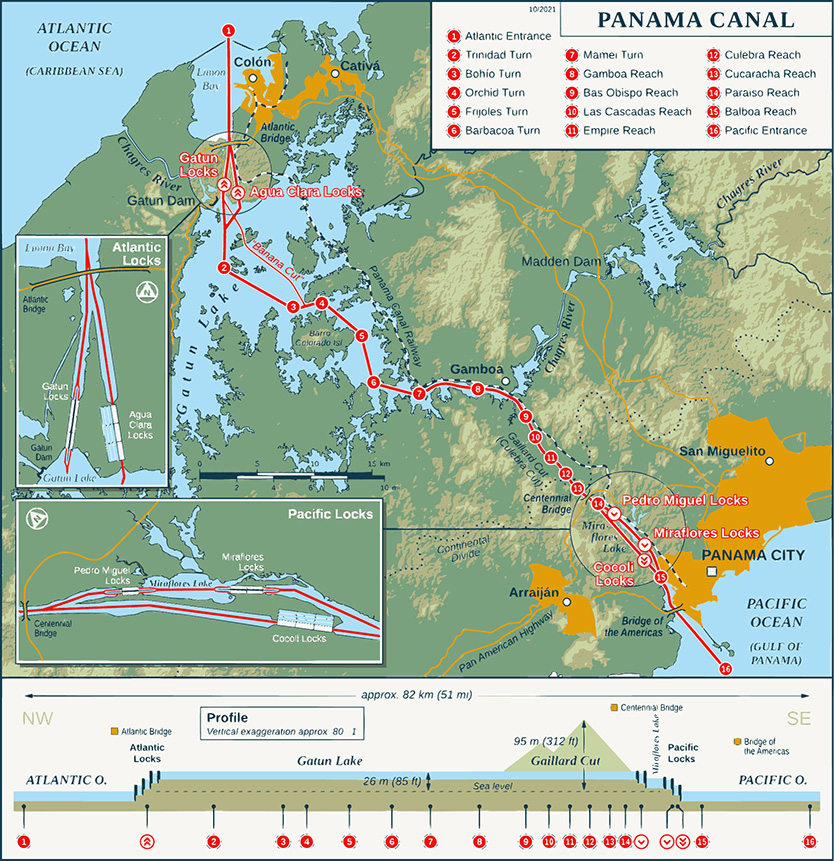
Panama Canal Map, 2012 Prior to 1919, when Rose likely moved to Paraiso, the town had been prominent – home to many Gold and Silver employees. The designation of Gold employee was largely reserved for American citizens and reflected the fact that they were paid in gold currency. Silver employees were predominantly West-Indian and were paid in silver currency. Rose’s family like arrived after 1918, when the white, Gold employees departed, and Paraiso became a Silver town. Located just north of the Pedro Miguel Locks, it served many purposes throughout its history. Paraiso was originally established by the French railroad which used it for light repair to trains and excavators during the French canal project. During the US Construction, Paraiso hung on the edge of excavation, so landslides were common. As work moved west in 1908, the town became mostly residential for employees working on the Pedro Miguel Locks and railroad workers. Two U.S. Presidents stopped in Paraiso during their visits to the Panama Canal – Theodore Roosevelt in 1906 and William H. Taft in 1910. In July 1913 the Canal was nearing completion as the Dredging Division decided to make Paraiso their headquarters. By 1918, most Gold workers had moved from Paraiso to Pedro Miguel, and the town became a segregated “Silver” town. Rose and her family lived here during this time, and could have been one of the more affluent families. Samuel’s job was the highest paid artisan position, while Rose contributed to the family financially through taking in laundry. Even though Samuel worked in the Pedro Miguel Locks, Paraiso was home to the silver employees. In 1936, the Dredging Division moved to Gamboa, which after a short abandonment, became a military post in 1939. Camp Paraiso, tasked with defending the Canal, closed in 1943 leaving behind barracks that were converted into family housing. During the 1950’s, Paraiso was considered one of the Canal Zone’s most modern communities. The town history provides context for Rose’s experience in the town and shows that it was an important location during the construction of the Canal. To see the locks Samuel worked on, use the arrows to view the slideshow.
The building circled on this census map is where Rose, Samuel and their family lived during the 1930 census in apartment G and H. The map is from the 1940 census, but we assume the numbering stayed the same between the two records. By 1940 the Grimes’ lived in a home they built, so it isn’t on this map.

Census Enumeration District Map, 1940 Some documents pertaining to Rose and her family mentioned they lived in Red Tank, another name for the Paraiso area. The origin of Red Tank is blurry. In a December 1953 edition of The Panama Canal Review, reports the town was then deserted but shares an account of how it may have gotten its name. In 1904, a timetable for the Panama Railroad showed a stop named Pedro Miguel Tank. At this stop, there was a big water tank, painted with red lead according to, “old timers, like William Jump.” The three towns, Red Tank, Paraiso and Pedro Miguel, seem to blur together in old articles and accounts of the area. The pictures below show examples of Silver housing.


Pictures of Paraiso from the Panama Canal Collection at the University of Florida Family Life
All of Rose’s children were born in Paraiso, according to census data. The oldest of six, Silvia Valina Grimes Tappin, was born in 1916, followed by George (1918) and John O. (1919). The second three children were James O. (1920), Mabel L. (1923), and Alice B. (1924). The Grimes’ family continued to live in Paraiso at least until 1930 when the household appears on the 1930 census. We were unable to find any additional official documents with Rose until her death certificate. During this time, several chaotic world-wide events took place – World War I, a big strike, a coup in Panama in 1930, and the Great Depression. Through it all, Rose was able to help her neighborhood. Rose explained to her granddaughter that she was called “Señora Rosa” by her community and that the name was, “bestowed by the many people I was able to help during the depression era.” She raised a family, contributed to the household financially, and was a pillar of the neighborhood. This time was not without trial though. She says, “When the crash came in 1929, I lost every cent that was in the bank.”
Even though the world around her was tumultuous, Rose’s responsibilities did not end – her children still needed to be fed. While Rose had originally stopped working outside the home once she and Samuel began raising a family, she resumed taking in laundry as an independent contractor. According to Flores-Villalobos, many Black women took this route as independent contractors, not just in laundering, but with selling food or other goods. As Flores-Villalobos writes, “West Indian laundresses often set their own prices and could reportedly make as much $6 in one day, equivalent to a Silver laborer’s weekly pay. For comparison, a white Gold Roll nurse earned $50 a month” (pp. 117). This provides key insight into how much Rose contributed to her family home as a homemaker. Of course the labor that involves is already a full-time job, but in addition she brought income as a laundress – characteristics of a self-determined, driven, business-savvy, and intelligent woman! In the midst of her already demanding schedule within her own family, Rose also provided food for those in need from her community. She said, “if anyone came to the house asking for food, there was always something for them… Regardless of how much or little we had, it would [be] shared,” truly embodying the beloved title of Señora Rosa.

Panamanian Forest, 1870s (Angrick) 
Map of Panama Canal with Chilibre marked When the banks returned the money their family had lost in the 1929 crash, Rose and Samuel started building their own home in Chilibre. Chilibre, at the time, was a bushy or forested area which was good for the farming of grains, vegetables, fruit trees, root vegetables, bananas, cane, and yucca. The couple raised cows, goats, chickens, bees, and ducks in addition to the produce previously mentioned (information provided Carmen Grimes Eccles). They built a house here, which was finished in 1939 and celebrated Christmas in their new home. Rose notes that the hardest part was building the well – the men spent 6 months working on it. Her adult sons contributed to the construction of the home; son James O even added his carpentry skills. Finished in 1939, the house took 18 months because most of the material was acquired from the American government in the Canal Zone. The government has strict specifications. If the material and equipment they bought did not meet regulations the government would throw it away, even though it was nearly new. Most families lived in government housing, so this is unique. Units were built for bachelors, single women, and families by the US government, not by the individual families themselves. Due to Samuel’s higher position and Rose’s income that allowed them to build a home.
After her family moved into the new house, her granddaughter Valina moved in with her. Rose extolls all of Valina’s equalities, showing her to be a doting and loving grandmother. Valina, like her grandmother, leaves everything she knows to immigrate to a new country for opportunity. On Christmas Day 1956, Valina announced she was going to university in the United States. Like Rose leaving her homeland, never to see family in Grenada again, Valina repeated history by taking a brave step away from home. Her plane took off August 7, 1957 and Rose never saw her again. Rose closes her personal narrative saying, “Thursdays child has far to go.” She believed in her granddaughters potential and knew Valina would be resilient in a new place, just like herself.
A Lasting Legacy

We know Silvia married a man named Bindley B. Tappin (Social Security Numerical Identification). Together, they had three children – Valina C. Tappin Walker (1937), John E. (1939), and Joel W. (1941). Their second child George O. married Ivy Whittier and were parents to seven children. John O. marries Violet and they had 6 children. James O. and Carmen also have 7 children (their daughter Carmen Grimes Eccles has gifted the Grandmother Rose Grimes story to the University of Florida for us in collaboration with this research project). Mabel L. had no children and Alice B. had three with Baltimore Brown. This family tree shows Rose’s extended family and all the lives her legacy touched.

Rose passed away on the 12th of November, 1970 in Panama City, Panama (Gorgas Hospital Mortuary Registers). Her grave can be found Corozal cemetery in grave number 4.
We would like to thank Carmen Grimes Eccles for all the support and information she shared with our team as we wrote this post. It was invaluable to us during the process and provided insight that allowed us to understand Rose better. Thank you so much!
You May Also Like

George Stratford Seymour Cockburn


