-
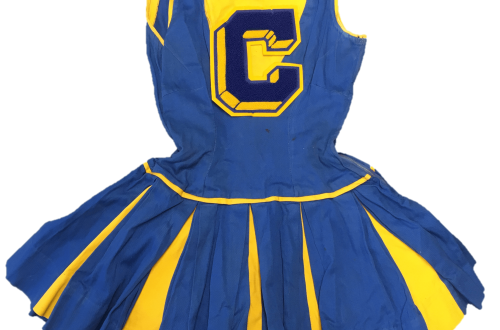
Jamboree Parade
The caption on the back of this photograph reads “CHS-BHS, Cheerleaders 1968”.

Were you a CHS or BHS Cheerleader in 1968? Or can you identify anyone in this photograph?
What can you tell us about the Jamboree Parade? Did it happen every year? Where and when did it take place? What was it celebrating?
Please share with us in the comments section below!
-
Four Ladies in Cristobal
This photograph was taken on January 28, 1928.


Can you identify these four ladies or add any other information to this photo’s record?
Please share with us in the comments section below!
-
Hat Weavers
This postcard showcases two women weaving the hats.


Have you seen this process in person? What can you tell us about it?
Please share with us in the comments section below!
-
Rose Marie
We know this photograph was taken in October or November of 1943.

What can you tell us about “Rose Marie”?
What kind of place was it?
Can you identify the two women?
Please share with us in the comments section below!
-
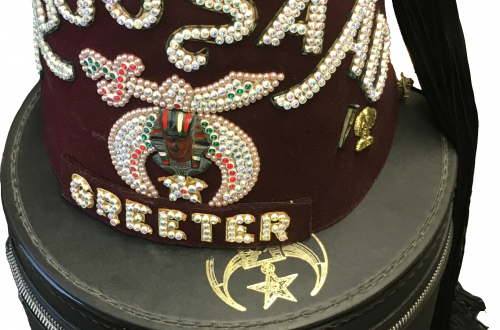
Emblem Club
We know this photograph was taken in 1939.

What can you tell us about the Emblem club?
Do you recognize any of the women photographed?
Please share your knowledge or memories with us in the comments section below!
-
Gamboa Women’s Club
This photograph was taken at the Gamboa clubhouse in 1943.

Can you identify the women photographed?
What occasions would the Gamboz Women’s Club meet? Can you tell us what is happening in this photograph?
Please share with us in the comments section below!
-
Excerpts from Threads of Silver and Gold: Women of the Panama Canal
[youtube https://www.youtube.com/watch?v=EyTahLTMm6A?list=PLm1EZOX-MZAXr3J_cSvXgsyn8iKExB3oR&w=640&h=390]
The video above was recorded at the public reading of the play Threads of Silver and Gold: Women of the Panama Canal, which took place on February 20, 2015 at the Hippodrome Cinema in downtown Gainesville. We would love to hear your reflections on the play or your own experiences and histories with life and work in the Canal Zone.
Clicking on the playlist icon in the corner of the video screen will allow you to select and view additional video excerpts from the play. Conversely, you can visit the YouTube page for the play directly at https://www.youtube.com/playlist?list=PLm1EZOX-MZAXr3J_cSvXgsyn8iKExB3oR and watch all of the videos there.
We look forward to hearing your thoughts!
-
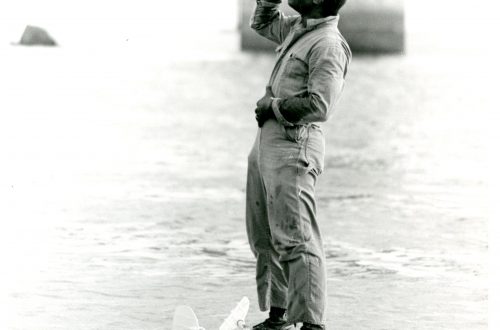
Edith Alley & friend filling sacks with sand, 1943
The caption on the back of this photograph reads as follows: “Filling sandbags for Civil Defense positions before/during WWII”.

What can you tell us about Edith Alley?
Where were these sandbags going?
Please share with us in the comments section below!
-
Caribbean Girls State 1954
What can you tell us about this photograph?

What was Caribbean Girls State?
Do you recognize anyone in this photograph?
Please share with us in the comments section below!
-
Oral traditions and long family histories, part 1 (the Harrison Family)
In Act II of the play Threads of Silver and Gold: Women of the Panama Canal by Deborah B. Dickey, we see two families with multigenerational histories in the Canal Zone sharing their experiences. In both cases a grandmother shares her recollections with a granddaughter, while an older (deceased) relative supplies monologues that recount their family history from the early Construction days.
We will share some scenes in two different posts that reflect the conversations of the two families, and look forward to reading your comments!

Actors portraying Grandma Harrison and Robin at the debut of Threads of Silver and Gold: Women of the Panama Canal. First, we see four generations of Harrison Family women. The family is in the midst of conducting an oral history interview to record Grandma Harrison’s past. We are sharing a snippet of the play below, and would like to hear about the experiences of your own family.
Have you had similar experiences or a history of relatives who went to Panama to work on the Canal in the early days?
Have you recorded events recounted by a relative, as Robin does in the scene below? We’d love to hear details about life and work.
How about any reflections on the scene taking place or the manner in which Grandma Harrison instructs her granddaughter?

Bachelor Quarters, Panama Canal Zone The following is a short scene from the play:
Robin
Well, okay, let’s see what else. (She refers to her notebook) Oh, I saw a picture of your first Sunday in Panama. Your Dad had chin whiskers. Did he have a beard?
Grandma Harrison
No.Robin
Oh it was a moustache— sorry. It was a nice, long moustache with little curls on the end. In this picture your sister, Jane, looked very mad because the photographer had taken her doll and put it off to the side. (They laugh at the memory) Did she bring it from Texas?Grandma Harrison
Yeah.Robin
Were you happy with Panama? Excited? … pleased?Grandma Harrison
It was all new to us. We were excited. Papa was assigned an old French cottage, to put us in, see. There was a bedroom and there was a front porch. It was just one short step from the street. All the porches and windows had screens, on account of mosquitoes. All the roofs were made of corrugated iron. No shingles. Right on the corner of the house was a big mango tree. When the mangoes would fall off the tree and hit the tin roof it make a kind of noise. Jane and I would say, “That’s mine!” The next morning, we’d go out and pick up the mangoes—they were great!
Old French cottages. Robin
I remember Great-grandma Annie— every morning she would get up and dress. She’d have some trouble with her rolled stockings. I would help her with the rolled stockings. She’d come out and sit down. She’d have a half a grapefruit and a cup of hot water. I said, “Great Grandma, why are you having hot water rather than coffee?” She said it made her regular… and kept her young. She was fun to talk to. I loved to hear her stories about being a midwife. She said she once delivered a baby on a train, on Christmas day, because there was no time to get to a hospital. Didn’t your mother come to America with her father?(THE LIGHT CROSS FADES to reveal Robin’s great-grandmother, Annie Wright Calvit)

Annie L. Calvit, aged 66. Wrote autobiography: Eighty-eight Years of Change. Mother of
Mary Harrison. Great- grandmother of Robin, Christine, and Gail Harrison.Annie
My father told this to me: “It was a wild wintry night and the hour of midnight was drawing near, as I stood looking out of the window—thoughts more indoors than out—when a faint cry was heard.” The doctor said: “Jim, come in; you’ve got another girl!”That is when and how I first came into this world on January 18, 1868, at Callington, in Cornwall, England. I was the last of nine children. Nothing happened that I recall of great importance until my mother passed away leaving my father with nine children to look after and raise, which he did as best he knew how. I was sent to live in London with my father’s sister Bessie and when my father decided to take his family to America to live, he came and got me. I remember as we were walking to the station, he had me on one shoulder and my suitcase in his other hand, we noticed a procession coming down the street, and he said to me: “Annie, now is your chance to see Queen Victoria.” We stopped and stood at the edge of the street and when her carriage got abreast of us, Father removed his hat and Queen Victoria smiled at us and offered her hand to me. Father said: “Annie shake the Queen’s hand,” which I did, then her carriage started to roll away. The thing that stood out in my mind was the Queen’s long white gloves for I had never seen long white gloves before. We landed in Quebec where we were met by my father’s brother who had lived in America for about ten years. My father built railroad towns, shops as well as houses for the people who would work in the shops. In 1881 he was sent to Harrisburg, Texas. This was where I met Stephen Calvit, later to become my husband. He was Secretary of the Sunday School and the Sunday School was holding an election to decide who would be Queen of the May. I was the lucky girl and was crowned Queen of the May, much to Stephen Calvit’s delight.
(THE LIGHT CROSS FADES to the Harrison home)
Grandma Harrison
…and when he asked for her hand, my grandfather asked them to wait six months. Well, six months went by and when he asked again, my grandfather still felt they were too young and so they talked it over and decided to get married without his consent.
Robin
So they eloped?Grandma Harrison
Yeah.Robin
That took a lot of courage to stand up to her father like that!(THE LIGHT CROSSES BACK to Annie)
Annie
My father was not angry but he left us alone until he saw whether or not we were really trying to make a go of our marriage. In 1906 my husband became restless and dissatisfied with his work in Texas, so we went to California so he could visit the various shops and try for higher wages. While we were traveling around California, my husband heard about the recruiting of men to work in Panama, to help in building the Panama Canal, so instead of moving to California, we decided to come to the Isthmus of Panama.(THE LIGHT CROSS FADES to the Harrison home)
Robin
How long was your father in Panama before he sent for Annie and all you kids?Grandma Harrison
(she slowly recalls the details) Well, he and my oldest brother went down in November of 1906, and they were assigned quarters in the little town of Gorgona—the halfway mark on the railroad between Colón and Panama City. It was genuine frontier life. My brother wrote to us and told us all kinds of stories and kidded us girls that we would have no trouble finding a husband, since there were ten men for every woman. So then the rest of us joined them a few months later.Robin
So then you landed in Panama.Grandma Harrison
Yes and when we arrived, we docked in the morning. Now, we couldn’t find Papa—, high nor low. All of us kids and Mama looking the men over— the men down below on the docks—we couldn’t find Papa nowhere around.(THE LIGHT comes up on Annie)
Annie
We had a family whistle that whenever we were out and got separated, that we had the whistle and then we could find out where it came from. That way, we all kept together, kids and all.Grandma Harrison
Finally Papa whistled.Robin
What was the whistle like?Grandma Harrison/Annie
(…simultaneously they whistle the 6 note signal) B-B-G-G-C#–DGrandma Harrison
He whistled that several times and we looked down and he whistled again.Annie
There’s your father, he’s got a mustache.Grandma Harrison
(to Robin) He’d grown a mustache. (They all laugh)(THE LIGHT CROSS FADES to the James’ home)