-
Ester Greene: Balboa High Alumna & International Track Star
This post is one of a special series of posts contributed by University of Florida graduate students, Azariah Rodriguez and Caroline Davis. The students are working on projects to digitize and promote materials related to the history of Balboa High School and the annual Ocean-to-Ocean cayuco race, which are two of the most frequently requested topics we have received from researchers recently. Within those broad topics, the students identified objects and stories that they wanted to explore in more depth and then conducted research and wrote posts to tell those stories. We hope you enjoy their contributions!

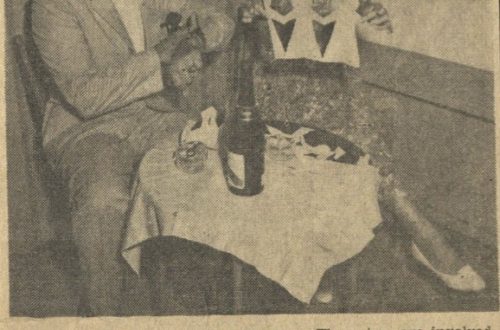
Photograph of Ester Greene on left under article titled, “We’re Going After Every Point, Shout Girls Off for Paris Athletic Games.” The Evening World, 1 August 1922. Courtesy of NYS Historic Newspapers. On August 1st, 1922, thirteen courageous women sailed from the U.S. to Paris, France, to participate in an international track meet. This would be the first U.S. women’s team to ever compete in the First International Track Meet, hosted by the Federation of Women’s Sport Societies of France, on August 20th, 1922. The Federation invited five countries, France, the U.S., Czechoslovakia, Switzerland, and Great Britain, to a competition that would forever change attitudes towards women’s track. In the 1920s, women could only compete at the Olympics in a few categories, such as figure skating or tennis. The popularity of and involvement in the “Premiers Jeux Olympiques Féminins” (First Olympic Games for Women), as the Federation called it, would push the International Olympic Committee to include women’s track in 1928.

Class of 1923, Balboa High School, The Zonian, 1922.
Ester Greene is circled in red.Among the U.S. women at this momentous event was the Canal Zone’s own Ester Greene, who graduated from Balboa High School, class of 1923. The school’s yearbook, the Zonian, touts Greene as, “undoubtedly the best long-distance runner and high jumper of which the Canal Zone can boast.” She placed in the top three for four different categories at the Balboa High School Inter-class Track and Field Meet, causing the juniors to win in 1922. She also placed top three in numerous categories for the Inter-class Track and Field Meet in 1921, with her sophomore class winning the tournament that year as well. Greene’s success on the track at Balboa High led to her participation in the First International Track Meet. She participated in the 100-yard dash and unfortunately was eliminated in the first trial.
The inclusion of a physical education program into the public schools was introduced by Superintendent Smith in 1908, establishing athletics as a core tenet of the Canal Zone Schools. The following track and field medals were awarded to other athletes, but Ester Greene was likely to have received many medals similar to these while at Balboa High School.


Three medals for achievements in track and field, awarded at various sports events.
From left to right: Community Medal of J.F. Burgoon of Balboa High School, c.1920-1930, Gift of James (Buster) and Jeanne Burgoon. 2001.020.003.003;
Track and Field medal, II.2023.999.58;
Medallion: Edwin C. Jones, July 4, 1929, 2nd Place, 440 Yd Dash, II.2025.999.25.
Sources:
https://www.jstor.org/stable/27570497
https://daily.jstor.org/how-a-paris-meet-changed-womens-track-and-field/
The Evening World 1 August 1922 — The NYS Historic Newspapers
https://ufdc.ufl.edu/UF00093678/00016/images
This post was created using endowment funds raised during our Digitization Campaign. The funds from this campaign enabled us to hire students to digitize materials in the Panama Canal Museum Collection (PCMC) and make them freely available online for scholars, students, and people globally.
You May Also Like

George Stratford Seymour Cockburn
-
The Legacy of Women Racers in the Ocean-to-Ocean Cayuco Race
This post is one of a special series of posts contributed by University of Florida graduate students, Azariah Rodriguez and Caroline Davis. The students are working on projects to digitize and promote materials related to the history of Balboa High School and the annual Ocean-to-Ocean cayuco race, which are two of the most frequently requested topics we have received from researchers recently. Within those broad topics, the students identified objects and stories that they wanted to explore in more depth and then conducted research and wrote posts to tell those stories. We hope you enjoy their contributions!
I think the best way to begin this story is with what first prompted me to write about it. One of the most engaging parts of the Panama Canal Museum Collection (PCMC) is its online blog site, which highlights individual collection items and interprets them through public-facing posts for readers and researchers alike. Since I am currently working through scanning Cayuco Race photographs for digitization, I came across an image that had already been featured in a blog entry.

Award Ceremony for First Place in the Canal Zone Boy Scouts Council’s Cayuco Race, 2000.056.002 What makes these posts especially meaningful is that their comment sections remain open to the public. This creates a rare opportunity for archival photographs to spark conversation and collective memory. In this particular post, the reader is asked questions about the image, and dozens of former Zonians responded by recounting their own experiences racing in the Ocean-to-Ocean Cayuco Race. In this way, the archive becomes something living: not simply a repository of images, but a space where personal stories and community history continue to unfold.
One comment in particular immediately stood out to me. Margaret Whipple Booth wrote:
“I was in the 1973 race and it was the first year for girls to enter. We came in last and won the lead anchor award. I was in the Sea Explorers Coca Solo ship 9. We were an all girl crew and fixed the cayuco ourselves with our skippers help. The day of the race the cayuco had a leak so we fixed it with chewing gum and it stayed for the whole race. It was a great and exciting two days.”

Booth’s memory is one of fun, but also marks a time of change in the history of the Cayuco Race. 1973 was the first year that girls were officially allowed to enter, signaling an important moment of inclusion in a sporting tradition that had been dominated by male crews. The Panama Canal Spillway writes in a newspaper section from April 6, 1973:
“At least two boats will be paddled by young ladies in the 52-mile race. Feminine paddlers will represent Ship 9… and Post 26…”1
Her recollection reminds us that women’s participation was not just about competing, but being athletes in one of the most popular events tied to life in the Canal Zone. What stands out most in Booth’s story is the collective effort behind it. This was a team that repaired their own boat, problem-solved under pressure, and relied on each other to persevere. The chewing gum patch becomes an amazing symbol of resilience and ingenuity, reflecting the endurance required to complete such a grueling race. Booth’s background as part of a naval family stationed in the Canal Zone also provides insight into how young women, like many Zonians, became involved through community networks and youth organizations.
Her comment immediately inspired me to highlight women athletes in the Cayuco Race, using her experience as a starting point. Another incredibly helpful source has been Frank C. Townsend, who wrote about the early years of the race between 1954 and 1962. Townsend notes that even before women were officially included in the full Ocean-to-Ocean competition, there were moments when all-female crews were finding ways to participate. He mentions that in 1955 an all-female group called the Gamboa Mariner Scout troop, led by Gamboa Sea Scout Skipper Mr. Holmes’ wife, were allowed to unofficially paddle two cayucos in the race from Gamboa to Pedro Miguel. One of the female scout members recalls:
“We did not do the locks. We had a heck of a time just getting to Pedro Miguel, as we kept drawing water and bailing out! What fun! We would leave from Gamboa through Pedro Miguel and Miraflores locks and go over to Taboga for one or two nights.”
Though brief, this anecdote echoes many of the same themes found in Booth’s memory: endurance, teamwork, improvisation, and joy in the face of challenge. Townsend also references Jackie Dunn Fearon as someone who would know more about that experience, suggesting that many women’s stories remain present but under-documented.
It seems that women crews weren’t common until the 1980s, to which we see more newspaper and photographic documentation. In an excerpt from The Panama Canal Spillway in 1984, it is reported that “rotating awards went to ‘Situation Hopeless’ the mixed-crew champions, and ‘Bejuco’ winners of the all-female category.” Below is the accompanying photograph, which does not have a caption but I assume is the “Situation Hopeless” crew. Look at the strength of these women, and the concentration on their faces!

Two years later, the 1986 Zonian (Balboa High School’s yearbook) published a short section dedicated to that year’s Ocean-to-Ocean Cayuco Race. The categories participating in the race were the trophy boats which consist of men and women, teams of four people and co-ed boats, and the patch boats which consist of eight persons. The photograph shown below is taken from this section, depicting “the exhausted crew, Situation Hopeless, after their win in the all-girl crew trophy.”

The following year in June 1987, the “Short Cut” crew and “Bejuco” crew were photographed, and their names are documented: Front row – “Short Cut” with crew from left: Eva Anderson, Joanne Reilly, Angie Stephenson and Karen Fahlgren. Back row – “Bejuco” with crew from left: Joann Eckel, Kindra Rankin, Karen Rankin and Cindy Coykendal.

Short Cut and Bejuco crews, 2008.005.048.005 Below is another photo of the 1987 all girls Cayuco “Bejuco”.

Bejuco crew, 2008.005.051 Taken together, these accounts show that women were part of the Cayuco Race history all along, gradually expanding what participation could look like through determination and opportunity.
Today, these memories remind us that the Cayuco Race is not just a sport, but also one of empowerment, inclusion, and community resilience. Women paddlers, whether patching leaks with chewing gum in 1973 or bailing water in the earlier years of the race, helped redefine who belonged in this tradition. By preserving and digitizing these photographs through the PCMC collection, we ensure that their contributions are not sidelined, but recognized as part of the race’s ongoing legacy. Their stories invite future generations to see themselves in the cayuco: not only as participants, but as pioneers. Below is a more recent photo of the “Situation Hopeless” cayuco and crew.

Situation Hopeless crew, 2004.100.002.003 This post was created using endowment funds raised during our Digitization Campaign. The funds from this campaign enabled us to hire students to digitize materials in the Panama Canal Museum Collection (PCMC) and make them freely available online for scholars, students, and people globally.
You May Also Like
George Stratford Seymour Cockburn
-
A Digital Reunion


One major focus of our digitization campaign is to scan as many materials as possible about Canal schools. We have made exciting progress and wanted to share some of the latest additions in our last blog post of this year’s series.
Left: Varsity Sweater from Balboa High School. Gift of Vicki Sizemore. 2006.009.001.
We are compiling a history of the schools and have been hard at work locating information and scanning images. We started with Balboa and have enjoyed mapping the transition from the original wooden school to the concrete school built on the same location in 1917, and the move of the high school to a building nearby.


This wonderful photo album of the construction of the new Balboa High School building that opened in 1942 was recently put up in our digital collection.


Aerial Photograph of Balboa Schools, 1962-1979. Gift of Anne Desmond Abele. II.2019.999.28. 
You can follow Balboa High School all the way to May 15, 1999 and watch a video of the final graduation ceremony. Click here to watch. Or read the May 1999 issue of the Parrakeet.

Balboa High School, The Parakeet Commemorative Edition, May 1999 The collection also illustrates the history of student life – sports, dances, and probably a few days of skipping school. Click on an image to enlarge the slideshow and see some additional captions.


For three years in a row one of the most frequent questions we got was about the Curundu school publications going online and we can finally say, yes, they are online!
Click on the links to look at Cougar’s Cache and Cougar’s Pride. Cougar’s Scratch is coming soon.


Curundu Junior High School Cougars Patch. 2000.35.12. Gift of Richard Williams. In addition to the yearbooks, school publications like newspapers, creative writing journals, and newsletters are also available and text searchable. They include the Balboa School News, the Banquet Bugle (BHS), The Chatterbox (Diablo Heights Elementary), Deviled Ham (Canal Zone College), The Fledgling (Balboa Junior High), Isthmian Inklings (BHS), The Parakeet (BHS), Saltwater Papaya (Canal Zone College), Sun Dial (Cristobal Jr. Sr. High), Tiger Pause (Cristobal Jr. Sr. High), Tiger Tales (Cristobal Jr. Sr. High), Trade Wind (CHS), Zephyr (CHS), and Zephyrus: The Magazine of the Arts (BHS).


Someone recently gifted us the final issue of the Rainbow City Jr. Sr. High School school newsletter Arco Iris. It’s the only issue we have! Do you have any others that you could share with us? We are also looking for additional issues of the Arco Iris or Apex yearbooks.
Left: Arco Iris, 1977.

A number of photo albums and about the schools are also in the digital collection.
Canal Zone Schools Photo History Album, 1904-1953. 2011.999.148.

Latin American Schools Album. 2002.022.008. (This album is only partially digitized as of posting)

Panama Canal College Album, 1980-1989. 2002.022.007. (This album is only partially digitized as of posting)


The next batch of items waiting to be scanned and put online includes hundreds of school related items like photographs and photo sets, scrapbooks, programs, invitations, handbooks, and more publications so keep checking the digital collection for more.
We hope you have enjoyed this year’s fall series on our Digitization Campaign and a big thank you to everyone who has supported us.

Zonian Yearbook, Balboa High School, 1958 -
Welcome to the Team, Isabella!
We are thrilled to introduce you to a new member of the UF team: Isabella Loya.
Isabella has been working with the Panama Canal Museum Collection since August this year, but before that she worked as a student assistant in our Latin American & Caribbean Collection. Isabella is the person responsible for scanning so many amazing treasures and making them available online. Isabella position is fully funded by the generosity of our supporters, so thanks to everyone who has contributed in the past couple of years. And now we’ll let Isabella tell you a bit more about herself and her interests. Thanks!
Hello all!
My name is Isabella Loya and I am the new Imaging Assistant for the Panama Canal Museum Collection. I have been working at the George A. Smathers Libraries system since I began my undergraduate degree at UF. I am currently pursuing two master’s degrees here at UF in Museum Studies and Latin American Studies.
I am originally from Miami, which allowed me to grow around so many different cultures. This further deepened my respect for them and the need to preserve them. I hope that the work I do will uplift and raise awareness for the preservation of these varying cultures.
I am passionate about cultural preservation and making this collection available for public access. This job aligns with what I want to do in the Galleries, Libraries, Archives, and Museums field. I hope that the work being done on this collection will serve as many people as possible. Thank you so much for giving me this opportunity.
-
Welcoming New Team Members!
We are thrilled to be welcoming two new student assistants working on special projects with the collection involving digitization, description of objects, creating videos, and other activities. We want to give them an opportunity to introduce themselves to everyone:

Hi! My name is Caroline Davis and am a second-year graduate student in Museum Studies! I grew up in Jacksonville, Florida, and attended Flagler College in St. Augustine studying Art History for my undergraduate work. I am interested in archival studies and collections management, especially oral history methods.
I have been working in the Smathers Libraries’ Special & Area Studies Collections for almost a year in various projects. Currently, I am working with the PCMC on processing and digitizing collections related to the Balboa High School.

Hello! My name is Azariah Rodriguez and I am a first-year graduate student in the Museum Studies program. For the next few months, I will be working with the Panama Canal Museum Collection here at Smathers Library to curate stories from everyday life in the Canal Zone. My first projects since starting has been finding what I can on the popular Cayuco Race and Canal construction equipment.
I am very excited to continue working with this amazing collection!
-
Your Digital Postcard from Panama

Arrived last Sunday after having a delightful trip. It is more beautiful here than anything I have ever dreamed of.
– Postcard from H.H.W. to Miss Veronica Herz, 1907, Empire, Canal Zone

Postcard of a Steam Shovel in Operation on the Canal. Mailed from Empire, Canal Zone, December 4, 1907. II.2017.36.105.347. Brad Wilde Postcard Collection. The handwritten caption reads: Arrived last Sunday after having a delightful trip. It is more beautiful here than anything I have ever dreamed of. Address Empire, Canal Zone H.H.W.
We are proud to be the home of the Brad Wilde Postcard Collection which holds over 15,000 digital and 5,000 physical postcards depicting life and work in Panama, the Canal Zone, and at the Panama Canal.1
Over 6,200 are now available online and more are going up every day!
Having a collection of this size is a tremendous opportunity to explore the environment and the people who lived and worked at the Canal. It includes both publisher and real photo postcards as well as mailed and unmailed. Real photo postcards are especially valuable because they are unique images taken by individual people.
Postcards are amazing resources. They illustrate the changes in a location over the decades and can provide personal tidbits of life at the time if they were used.


If you look closely in the early photograph you can see that the palm trees are so new that they are still surrounded by protective wire cages. II.2021.36.105.5797 and II.2021.36.105.2492. Brad Wilde Postcard Collection. Click this link to view a larger version of the early photograph, https://ufdc.ufl.edu/aa00116743/00001. 

Postcards of the Rear View of the Tivoli Hotel. Note the addition of the 3-story wing in 1911. These details can help us date photographs and images on unused postcards that do not have a cancellation stamp. II.2021.36.105.5427 and II.2021.36.105.5423. Brad Wilde Postcard Collection. 

Postcard of 1911 Carnival with a group of children wearing hats that read “Compaña Infantile Bomberos,” March 22, 1911. II.2021.36.105.904. Brad Wilde Postcard Collection. The note on the back reads: “Dear Mother – Everett and I were out rowing all day yesterday and my face looks like a boiled lobster. Frank.” 

Postcard of Balboa School, Balboa, c. 1925. II.2021.36.105.3236. Brad Wilde Postcard Collection. The note on the back reads: “Dear Amy. The picture on the other side is the knowledge factory where Edith got her early training. Rush also gained a little information here. This school is going full blast now.” 
This postcard, mailed from Ancon to a family member in New York in 1913 includes another humorous slice of life.
It reads: “Dear Catherine – Here I am in Panama & this is the hottest place on Earth. Wish you could see these palms, coconuts, banana trees & so on – Enjoyed your letter, will write soon. Sincerely, Uncle Henry.”
Left: Back of Postcard: View of Ancon Hospital Grounds, Panama. II.2021.36.105.3904. Brad Wilde Postcard Collection.

When we were selecting postcards for this post, we of course found the perfect one for the October post Panama’s Past in Print (and now online!) about newspapers and the Star & Herald in Panama.
Left: Postcard. Star & Herald Building where the paper was first published in 1849 – Panama. II.2021.36.105.346. Brad Wilde Postcard Collection.
And this one of a Navy plane at Coco Solo that would have been great for the Digital Intel post.
Right: Coco Solo Navy Airplane. Brad Wilde Postcard Collection.

We also found a postcard touting the benefits of the asbestos shingles installed on “the first permanent building erected by the U.S. Canal Commission in Panama.” Postcard: Caretaker’s Residence Brazos Brook Reservoir. II.2021.36.105.141. Brad Wilde Postcard Collection. Click on the images to enlarge.


There were two postcards with identical images but different captions. One is, “Americans Bathing in the Panama Canal Locks at Gatun Sept. 1st, day after Water was Admitted to Locks.” The other is, “Aquatic Sports at Miraflores Locks.”
Can any of you Canal experts look at the image and tell which set of locks is correct? Click on the images to enlarge.


This image of a “wading pool in Balboa.” Click on the image to enlarge.

A wonderful view of Gatun Locks in the center, the 1930/40s Third Locks excavation on the left, and a section of the French canal excavation on the right. Click on the image to enlarge.

Watch or flip through this slideshow of Carnival throughout the decades. Click on the images to enlarge.


Or just enjoy some highlights. Click on the images to enlarge.


In addition to the postcard collection, in honor of the late Robert J. (Bob) Karrer, Jr., and with the generosity of his daughter Sara Lynne, we have started to digitize the important newsletter of the Isthmian Collectors Club (I.C.C. Newsletter/Journal). The Isthmian Collectors Club was created in 1975 with a focus on collecting materials related to postal history, philately materials, stamps, covers, and postcards from Panama or the Canal Zone. Their incredible journal also includes hidden histories and pieces of information related to all aspects of Canal history. As of this post, issues from 1980s-2010s are online.

We would like to acknowledge the efforts of Brad Wilde and Bob Karrer for their help and for providing us with past issues of this wonderful publication.
The Panama Canal Museum Collection also preserves Bob Karrer’s Papers which include the research materials Karrer compiled during his lifetime. His extensive collection touches on a vast and varied number of topics including military history of the Canal Zone, Canal equipment, censorship in WWII, townsites, famous visitors, important buildings in Panama and the Canal Zone, and more. He even has a small folder on unidentified flying objects in the area. His papers were a key resource when we were doing research for our blog post on Robert Fowler’s famous flight over the Panama Canal in 1914.
Stay tuned for more updates on the new treasures to discover online thanks to our digitization campaign. A big thank you to everyone who has supported us.
This post is part of our fall series featuring the current digitization campaign. With the support of the community PCMC has hired someone to work exclusively on scanning treasures in our collection. Over the next few months we will be sharing highlights of what we have accomplished so far. We hope you enjoy the posts and explore all the new things in the digital collection.
- Due to copyright restrictions some can only be viewed in detail on campus at the University of Florida, but many others are now available online in our digital collection. ↩︎
-
Digital Intel

Postcard of Fort Amador and 15th Naval District, Canal Zone. 1950-1979. II.2021.36.105.2525. Brad Wilde Postcard Collection. Throughout the history of the Panama Canal, the U.S. military was a critical and consistent part of the picture. The Marines were the first to arrive, but eventually almost all branches of the armed forces were represented there. Places like Albrook, Amador, Coco Solo, Clayton, Gulick, Howard, Kobbe, Quarry Heights, Rodman, and Sherman were household names to civilian and military alike.
As U.S. Army South (USARSOUTH), the Army service component command of U.S. Southern Command (USSOUTHCOM), goes through another historic change, we wanted to highlight it’s long standing connections to the Canal Zone and Panama, and some of the incredible history about the U.S military in Panama that you can find in our collection.
A brief(ish) history:

The Panama Canal Guard was the first to keep the waterway safe, serving during the construction and early years of operation (1907-1917). In 1917, the Panama Canal Department of the U.S. Army was established as a separate geographic command. It evolved into the U.S. Caribbean Defense Command during WWII, a “prototype unified command, to defend the Panama Canal and surrounding area.”
Left: Panama Canal Department Regulations that belonged to Major Walter F. Adams of the 14th Infantry. 1932. Gift of Brad Wilde. II.2020.1.20.
After the war, U.S. Caribbean Command became the theater command, and in 1963 it was renamed U.S. Southern Command (USSOUTHCOM). In 1986, United States Army South (USARSOUTH) was activated as the Army component of USSOUTHCOM. USARSOUTH moved its headquarters from Panama in 1999, eventually settling at Fort Sam Houston in San Antonio, Texas.
Right: United States Army Caribbean Service album of Captain Paul G. Krotts. circa 1949. Gift of Brad Wilde. II.2019.52.14.

U.S Army South and U.S. Army North are currently in the process of merging into a new command based out of Fort Bragg in North Carolina, the Western Hemisphere Command. I was unable to find a rendering of any insignia for the new command. Hopefully, it will still feature the Spanish galleon of the Panama years.
The printed publications, radio broadcasts, and televised programs that were produced by USSOUTHCOM and its predecessor organizations were indispensable focal points of news and community life at the Canal. Southern Command News, later the Tropic Times, was the flagship in print.
We are in the process of digitizing hundreds of issues of these newspapers!
Right now only the 1980s and 1990s are online, but in the coming months the 1960s-1970s will be available, so check back regularly. A huge thank you to Kboy Richie for helping with these publications!

Before USSOUTHCOM and Southern Command News, in the 1950s U.S. Caribbean Command printed the newspaper The Buccaneer (Caribbean Army News). These will be digitized soon too!
Left: Spillway, September 24, 1993

On November 11, 1999 Tropic Times printed its last issue. They celebrated the newspaper’s fantastic run with a commemorative t-shirt. Did you buy one?


Other military publications are being digitized as well, including P.C.A News, K-PASA, Panama Bulldozer, Engineer Bulletin, Commanders Digest, Plane Talk, Stock Item, Section News. A number of issues are from the Army and Navy in the WWII era. The March 1943 issue of the Panama Bulldozer touches on the1943 change from “left hand” to “right hand” driving that was covered in detail in our blog post Leaving Left-Handed Driving Behind.


In addition to newspapers, USCOUTHCOM was in television too. Most of you are probably familiar with the TV network SCN (Southern Command Network), but did you know about its predecessor CFN (Caribbean Forces Network)? Recognize anyone in the photograph?

Caribbean Forces Network (CFN) Televising Cristobal High School Cheerleaders and Mascot, 1957. Canal Zone College Collection. 2005.048.034.014 You can find yourself, family, or friends online in some of our Armed Forces Telephone Directories from the later 20th century. Our entire collection of telephone books starting in the 1940s is currently being digitized and will be online soon too.
For a more detailed history on telephone service at the Panama Canal see our Hidden Treasures in the Telephone Book blog post.


Military intelligence (the insignia on the right) also had a long history at the Canal. The 470th Military Intelligence Brigade was activated at Quarry Heights, Canal Zone in 1944. You can learn more in our digital collection about the roles they played during significant events like World War II and Operation Just Cause. Martha Duncan, a U.S. intelligence officer with deep roots in Panama and the Canal Zone, played a vital role in the eventual apprehension of General Noriega. We had the privilege of sitting down with her for an oral history interview that is now part of our collection. She talked extensively about her childhood in Curundu and Chorrera, playing sports, the importance of family and community, and her career with the U.S. military. Her interview is in the final stages of going online so check back on our oral history page soon.
In the meantime, you can hear part of her story in a panel discussion we co-hosted on Operation Just Cause in 2019 that also included Joe Wood (Director of the Office of Executive Administration, Panama Canal Commission), Dick Morgan (General Services Director, Panama Canal Commission), Kurt Muse (Business owner), and Bob Rupp (Reserve Intelligence Officer). If that is not enough you can find her in Episode 2 of the Netflix show Spy Ops and the podcast True Spies, Episode 99, Catching Noriega.

The history of U.S. military in Panama and the Canal Zone is alive and well here at the Panama Canal Museum Collection, preserved alongside that of their civilian colleagues, and neighbors.
Left: Colonel Richard Barrere and Colonel Frank Mendez cut the 20th Anniversary cake for the U.S. Army Tropic Test Center. 1982. II.2022.63.1. Gift of Marcia Barrere.
What can you tell us about these military patches, pins, pendants, and print blocks from the collection? Did you serve or work in any of these areas? If so, share a story with us.


Stay tuned for more updates on the news treasures to discover online thanks to our digitization campaign A big thank you to everyone who has supported us.
This post is part of our fall series featuring the current digitization campaign. With the support of the community PCMC has hired someone to work exclusively on scanning treasures in our collection. Over the next few months we will be sharing highlights of what we have accomplished so far. We hope you enjoy the posts and explore all the new things in the digital collection.
-
Panama’s Past in Print (and now online!)

Newspapers were one of our top priorities when we were selecting the first batch of materials to be scanned in our digitization campaign. We are thrilled to report that hundreds of new issues have come online dating from 1851-1999. We are just getting started so new publications and issues will continue to go online in our digital collection. You can look at individual titles here.
Left: A man reads a newspaper in Cathedral Plaza, Panama City. 1900-1920. 2014.40.15. Gift of Dusty Graham and Ann Lafferty.
Although our main focus is the American Era of the Canal (1904-1999), we do have materials that cover early transits across the isthmus and the Panama Railroad. In 2016 we received an incredible bound volume that contained 134 issues of historic newspapers dating from 1851-1854: The Panama Herald (92 issues), The Panama Star (21 issues), The Aspinwall Courier (13 issues), The Steamer Courier (1 issue), The Weekly Echo (4 issues), and The Daily Echo (3 issues). Follow the links to read the newspapers online.

Many of these issues are rare and difficult to access. The Aspinwall Courier in particular has very few issues known in existence. Aspinwall was an early name for the city of Colón, built to be the Atlantic Terminus of the Panama Railroad and named for one of the railroad’s co-founders, William Henry Aspinwall. Visit our online exhibit about the railroad to learn more.

Panoramic Photo of Colon, Republic of Panama. Gift of Patricia Bjorneby. But if rare treasures are not your thing, perhaps the history of The Panama Herald will peak your interest.

Around 1850, in the days before the Panama Railroad, when transits of the isthmus were still made by boat and mule, John Judson Ames arrived on the Atlantic side. He was on his way to California carrying dreams of starting California’s first newspaper and a 1,200 pound printing press. To call his crossing calamitous would be an understatement.
Ames rented a flat-bottom barge to carry the press to the town of Cruces on the Chagres River. At some point in the journey the distribution of weight shifted causing the barge to tip. Much to everyone’s horror, they watched the press slide into the water and immediately sink to the bottom. After “a day or two” of extraordinary effort, a team of men eventually drug the press onto the shore and put it back on the barge.
They continued slowly to Cruces where the over-land portion of the crossing began. Ames rented the two largest mules that he could find, put a mattress across their backs to hold the press, and made his way to Panama City.
He arrived after three weeks of travel, sick with fever, and too late for the passage he had booked to San Diego. The next ship was not scheduled to come for three months.
To pass the time during his forced sojourn he decided to set up his printing press and start The Panama Herald. When the time came for him to leave, he sold the newspaper (minus the press) and within a short time it merged with a competitor, The Panama Star – thus the Star & Herald newspaper was born!
That Star & Herald was a standard news source in Panama from 1854 until the late 20th century. It is still published today as La Estrella de Panamá, the name of the Spanish language section created early in the run of The Panama Star.
Ames went on to found the San Diego Herald newspaper and included the account shown here of his trip across Panama in the first issue.
Right: San Diego Herald, Vol. 1, No. 1, May 29, 1851. California Digital Newspaper Collection.

In a fantastic twist of historical fate the actual press that sank in the Chagres River is still around!
It is currently safe and dry in The Henry Ford Greenfield Village’s Printing Office and Tin Shop.

Washington Press, circa 1848. Made by R. Hoe & Company, New York, New York. The Henry Ford Greenfield Village. Click here to see a video about the Washington Press and printing during this time. 
The Star & Herald occupied a beautiful building in Panama City’s Casco Viejo, near the famous Golden Altar in the Church of San José (Saint Joseph). The building was recently renovated into an apartment building if anyone is in the market for real estate with a storied past.

Postcard Panama City as seen from the Air. 1904-1930. Foto Flatau. II.2024.53.286. Gift of Mike Bedrin. Stay tuned for more information about other new additions to our online collection. Numerous school newspapers and newsletters, the Tropic Times/Southern Command News, U.S military publications from World War II, photo albums, and more are all waiting in the queue. They will be text searchable, so if you are looking for a specific event or person just type in some keywords and enjoy what comes up.

Newspaper stand in Santa Ana Plaza, Panama City. Foto Flatau. Brad Wilde Postcard Collection.
This post is part of our fall series featuring the current digitization campaign. With the support of the community PCMC has hired someone to work exclusively on scanning treasures in our collection. Over the next few months we will be sharing highlights of what we have accomplished so far. We hope you enjoy the posts and explore all the new things in the digital collection.
-
Saying Hello… and Farewell to a Team Member
Hello, all! My name is Sophia DeLeon, and for the last few months, I’ve had the privilege of being the Imaging Assistant for the Panama Canal Museum Collection. I am a recent UF graduate who has worked on digitization projects at both the UF Libraries and the Harn Museum of Art. My work with the PCMC has consisted of digitizing material from the collection in order to make it readily accessible outside of the archive.
I will be departing the UF Libraries this month to pursue a graduate degree in History at the University of Virginia, where I hope to put to good use all that I’ve learned working on the PCMC. Thank you all for letting me be part of this incredible project!

A note from the PCMC Curators: We’ll certainly miss Sophia! She started working with us in March as our first Imaging Assistant dedicated to digitizing materials in PCMC. In the four months Sophia worked with us, she was able to digitize thousands of pages from newspapers and other items and make them available in our digital collection. In upcoming months, we will spotlight some of our newly digitized titles here on our blog. Also, we are already in the process of hiring Sophia’s replacement so that the scanning work can continue without pause. Good luck with your graduate degree, Sophia!
-
Digging Through our Photo Albums and Scrapbooks

Photograph by Ray L. Quick. A handwritten caption on the back reads, “a steam shovel and Lidgerwood flat car train on west side of cut between Pedro Miguel Locks and temporary wooden trestle at Paraiso Junction.” February, 26, 1913. Photo Album of Ray L. Quick. 2011.999.142. Ray Quick worked in the Engineering Department during the final years of the construction of the Panama Canal. We saved the last post of our series highlighting the collection’s digitization efforts to showcase the number one item on our priority list of things to scan – photo albums and scrapbooks. The goal of these posts is to show you what kinds of amazing treasures we have and to get you excited about the digitization campaign.
Our photographs and papers are physically stored according to subject matter which makes them easier to find when you are looking for something specific, but you can’t do this with albums, scrapbooks, or groups of photographs – there could be countless topics included in one item. Finding the perfect photo or piece of information buried inside one of them can be difficult. Being able to search through them digitally is much easier and it is also safer for the objects.

It happens to us every year when we are working on our annual exhibit for the Albert H. Nahmad Panama Canal Gallery here in the library. (Did you know our gallery is dedicated to the BHS Class of 1958?)
A few weeks after an exhibition opens, we will be looking in a photo album or scrapbook and discover an object that would have been perfect for the exhibition and it’s too late.
Gary Hudson Album, 1974-2020. Gift of Barbara Hudson. II.2021.67.7.
Enjoy a few treasures that we found while working on the blog post and looking through over 33 linear feet of albums and scrapbooks.
Preserving the Past

Scrapbook of Betty Snow (Betty Chan, Betty Sutton), 1930s-1940s. Gift of Cheryl and Pat Williams. 2015. 235.1. 
Betty Chan (Top Right) Balboa High School Yearbook. The Zonian. 1943 This incredible scrapbook was created by Betty Chan, a member of the Balboa High School Class of 1943. In addition to documenting her life and Balboa High School during those years, it includes a significant amount of information about what was going on in the Canal Zone and in Panama during World War II. It is especially unique because it has materials from the Chinese community in the area and their war relief efforts. The contents include letters, school papers, tickets, invitations, programs, war bonds, ephemera, photographs, drawings, clippings, and more.
It will be wonderful for everyone to be able to browse this scrapbook online, but digitization is also important for preservation purposes.
The paper is extremely brittle which makes it prone to breaking and loss. As you can see in the photo below some of Betty’s writing is already gone. Digitizing it now ensures that nothing more is lost to time.

We have showcased this scrapbook in two classes here at UF, but it is too fragile to bring out very often or let a patron look through without assistance from a staff member.
Because of the significant amount of fold outs, letters still inside envelopes, and other details it will take a lot of time to digitize this scrapbook property.
Use the left and right arrows to enjoy these selected pages.
Scrapbook of Betty Snow (Betty Fern Yee Chan, Betty Sutton), 1930s-1940s. Gift of Cheryl and Pat Williams. 2015. 235.1.
Did you know…

Did you know that the Panama Canal’s famous dredge, the Rialto M. Christensen has been covered in snow?
Although it was commissioned by the Panama Canal Commission in the 1970s and has spent its entire career in the tropical climate of Panama, it was built at a shipyard in Japan. This album contains a photographic timeline of its origin, 1976 through 1977: from the keel laying ceremony, to construction, and then testing. It also includes a photo of the workers playing soccer during a break in a snow storm.
History of the Construction of the 15 Cubic Yard Dipper Dredge “U.S. Rialto M. Christensen, 1976-1977. Gift of Robert and Alice Christensen. 1999.8.1.
What might have been

This scrapbook album, “Golden Memories of My Years in the Canal Zone,” documents the years around 1958-1979 when Don Date worked as an architect in the Administration Building of the Canal Zone and includes various projects he designed: Canal Zone College, Gorgas Hospital, Cristobal High School, Balboa High School, housing, Coco Solo gym, Rainbow City theater, and more. The renderings below of proposed designs are a few of our favorites.
Album of Don Date. Gift of Don and Loretta Date. II.2022.81.23

This flyer is also in the scrapbook. I bought a t-shirt with this design at the Friends of the Panama Canal Museum Collection Silent Auction at the PCS Reunion a few years ago – I learned while looking at this scrapbook for the blog post that the shirt was made for the Chagres Aero Club Annual Air Show in 1979.
A small piece of a big picture
This photo album documents part of the Chief Aptakisic‘s 1976 journey from Panama to New York. The schooner was refurbished and sailed by Sea Explorer Scouts and adult volunteers to “Operation Sail ’76,” the Bicentennial Tallship Parade in New York Harbor.
It is just one small piece of the big historical picture that could be researched and reconstructed through the significant number of items we have about this subject. When you can view our albums in the larger context of the everything else in the collection, they have even more personal and historic value.
Did you sail on the Chief Aptakisic or participate in the Canal Zone Project Windjammer ’76 which helped raise the money used to refurbish the 53-foot sailing vessel?
Photo album relating to Chief Aptakisic, May-June 1976. Gift of Sherry Austerfield. II.2017.999.63.


In 2021 we received a large collection of papers and photographs from George Brisbin, captain of Chief Aptakisic during the 1976 voyage. It includes work plans, blueprints, photographs, invitations, pamphlets, keepsakes, writings by crew members, clippings, and other related items.
Other fabulous donations related to Chief Aptakisic include 16mm film footage taken by one of the crew members, additional photographs, scrapbooks, correspondence, awards, and more. See our Outside the Box blogpost to learn more about AV and film items in the collection.
Military Mementos
Our collection includes dozens of photo albums that document U.S. military tours of duty in or on trips through Panama as well as decades of scrapbooks created by Officers’ Wives Clubs. They include photographs, newsletters, souvenirs, job notes, and many other unique items.
An album of the 1958 Fort Amador Wives Club has already been digitized so you can get a preview of the great things to come once we are able to start scanning more.


Other civilian albums document the military history of the Panama Canal as well.


Photo album of before and after Operation Just Cause, December 1989. Gift of Joe Wood. 2005.83.22.
Albums for Governors and Administrators


These official photograph albums were created to document the service of different governors and administrators. Each series has 2-4 albums. They contain images of official meetings, diplomatic visits, awards ceremonies, dinners and luncheons, on-the-job duties, the wedding of a governor’s daughter, and events in Canal Zone life. They are wonderful resources and would spark memories for those that lived and worked at the Canal.
Mapping the past
This scrapbook includes maps of Coco Solo Stations during World War II. Because of the potential danger to installations during the war, military maps from the Canal Zone during the 1930s and 1940s can be hard to find. In addition to those official historical documents there are some great photographs of Canal Zone life.
Gary Hudson Album, 1974-2020. Gift of Barbara Hudson. II.2021.67.7.


A Grand Finale in Gavilan

The best kind of photographs and other materials come with additional information.
This scrapbook page lists the date, subject, location, and individuals pictured in the photograph at the bottom – an archivist’s dream!
In the summer of 1947, the “Gavilan Area Gang”, consisting of James Lovelady, David Tate, Ralph Conner, Bobby Zumbado, and Charlie Hardy, was photographed playing cowboys in the front yard of quarters 1531 on the corner of Calabash and Almond Streets in the Gavilan area, Balboa, Canal Zone.
Scrapbook. Gift of Bob Zumbado. II.2019.41.11.


We will close out this blog series highlighting our digitization campaign and our posts for 2024 with a sunset from the Photo Album Belonging to Frederick Nobles which is digitized and available for you to view in our digital collection. Gift of Helen Sheppard. 2002.143.1.
We hope you have enjoyed this brief glimpse into the buried treasures of our photo album and scrapbook collection. They hold incredible pieces of Panama Canal history, both official and personal, civilian and military, young and old, early and late in the 20th century.
See you in the New Year!
Please reach out to us if you are interested in donating any albums that you have related to the rich and complex history of the Panama Canal. John R. Nemmers, Curator, jnemmers@ufl.edu, 352-273-2766.
This post is part of a fall campaign to raise awareness about our two-year initiative to digitized more of the collection. The goal is to hire a new member of our team whose only job will be to digitize items related to the Panama Canal – that means more memories and research material online for everyone to enjoy! Click here to learn more about our digitization campaign.