Uncategorized
-
Welcome to the Team, Isabella!
We are thrilled to introduce you to a new member of the UF team: Isabella Loya.
Isabella has been working with the Panama Canal Museum Collection since August this year, but before that she worked as a student assistant in our Latin American & Caribbean Collection. Isabella is the person responsible for scanning so many amazing treasures and making them available online. Isabella position is fully funded by the generosity of our supporters, so thanks to everyone who has contributed in the past couple of years. And now we’ll let Isabella tell you a bit more about herself and her interests. Thanks!
Hello all!
My name is Isabella Loya and I am the new Imaging Assistant for the Panama Canal Museum Collection. I have been working at the George A. Smathers Libraries system since I began my undergraduate degree at UF. I am currently pursuing two master’s degrees here at UF in Museum Studies and Latin American Studies.
I am originally from Miami, which allowed me to grow around so many different cultures. This further deepened my respect for them and the need to preserve them. I hope that the work I do will uplift and raise awareness for the preservation of these varying cultures.
I am passionate about cultural preservation and making this collection available for public access. This job aligns with what I want to do in the Galleries, Libraries, Archives, and Museums field. I hope that the work being done on this collection will serve as many people as possible. Thank you so much for giving me this opportunity.
-
Welcoming New Team Members!
We are thrilled to be welcoming two new student assistants working on special projects with the collection involving digitization, description of objects, creating videos, and other activities. We want to give them an opportunity to introduce themselves to everyone:

Hi! My name is Caroline Davis and am a second-year graduate student in Museum Studies! I grew up in Jacksonville, Florida, and attended Flagler College in St. Augustine studying Art History for my undergraduate work. I am interested in archival studies and collections management, especially oral history methods.
I have been working in the Smathers Libraries’ Special & Area Studies Collections for almost a year in various projects. Currently, I am working with the PCMC on processing and digitizing collections related to the Balboa High School.

Hello! My name is Azariah Rodriguez and I am a first-year graduate student in the Museum Studies program. For the next few months, I will be working with the Panama Canal Museum Collection here at Smathers Library to curate stories from everyday life in the Canal Zone. My first projects since starting has been finding what I can on the popular Cayuco Race and Canal construction equipment.
I am very excited to continue working with this amazing collection!
-
Manhattan in Panama
Do you know anyone that is connected both to the Panama Canal and the Manhattan Project?
There are likely more but here are highlights from the lives of three individuals who were associated with both: Hartley Rowe, Colonel Elmer Ellsworth Kirkpatrick, and Katherine “Kitty” Oppenheimer.
Hartley Rowe
Hartley Rowe was an industrial engineer who worked on the construction of the Panama Canal from 1904-1908. He joined the Isthmian Canal Commission in November 1904 and transferred back and forth between the Panama Railroad and the Canal Commission as an Electrician. He managed a power plant in La Boca and was a resident engineer until 1919 when he returned to the United States after almost 15 years of continued service at the Canal. His work in 1912 included managing air compressor plants which were critical to powering the steam shovels digging the Canal.
Rowe belonged to the Society of the Chagres and is mentioned in their yearbooks, serving as a Vice President 1915-1916. https://ufdc.ufl.edu/aa00013083/00001 He was also an active member of the Panama Canal Society and appears often in their publication the Canal Record.
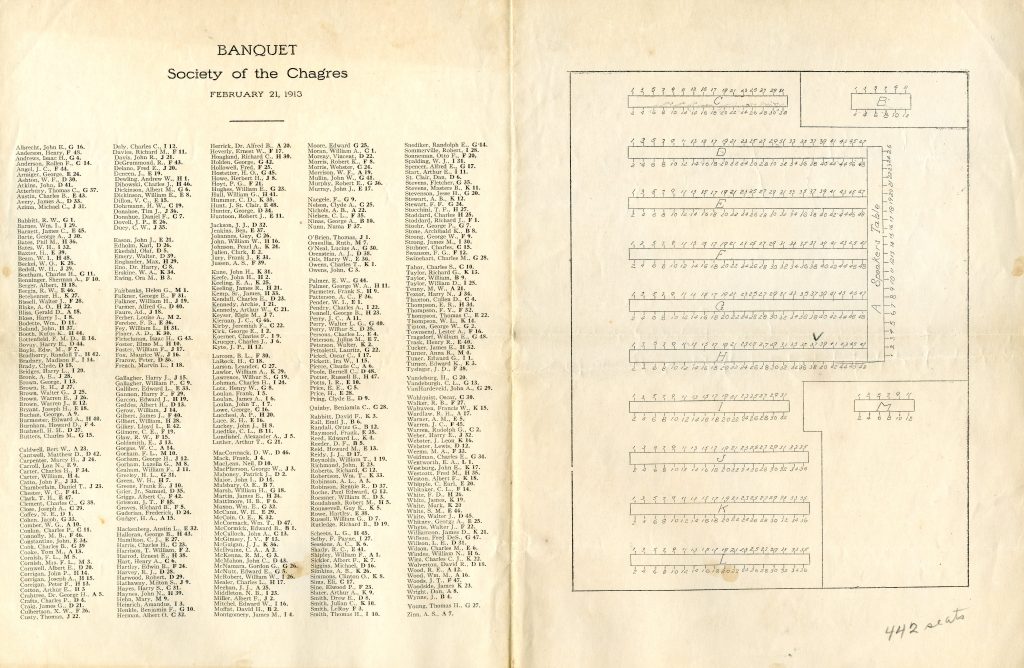
Seating Chart for the Society of the Chagres Banquet, February 21, 1913. 2011.021.013. Gift of Linda Adelsberger. The name Ben Jenkins is noted on the seating chart and he happened to be sitting right across the table from Hartley Rowe. Do you know who Ben Jenkins was? His travels through the Canal during his work for the United Fruit Company are well documented in the Panama American newspaper.


Panama American, June 6, 1926. Were any of your family members there?
Rowe joined the Manhattan Project in Los Alamos in 1944 and worked on the team transitioning the implosion program from weapons research to production.

General Advisory Committee of the Atomic Energy Commission in Santa Fe, NM, April 3, 1947. Left to Right: James B. Conant, J. Robert Oppenheimer, Brigadier General James McCormack, Hartley Rowe, John H. Manley, Isidor Isaac Rabi, and Roger S. Warner. Image from the Bulletin of the Atomic Scientists. Public Domain. Colonel Elmer E. Kirkpatrick
Elmer E. Kirkpatrick was an officer in the United States Army Quartermasters Corps and the Army Corps of Engineers. After graduating from West Point in 1925 his fourth, and first overseas, post was the Panama Canal. He arrived in August of 1939 and supervised war preparations at Fort Davis, Fort Randolph, France Field, and other anti-aircraft artillery positions around Gatun Lake.

The 1940 Census lists his family as living on the main road in Fort Randolph. 
In 1944, he started his work with the Manhattan Project. Initially he spent considerable time at Los Alamos and other locations. He assisted in inspecting bomb prototypes and observing training of the 509th Composite Group, the United States Army Air Force unit tasked with the deployment of nuclear weapons. He was also sent to the Pacific Island of Tinian where he was responsible for the development of facilities that would be used in the movements of the atomic bombs dropped on Hiroshima and Nagasaki.
After extensive service in the Construction Division of the Pacific he moved to Jacksonville, Florida and was involved in building the initial facilities at Cape Canaveral.
Another interesting connection is his service as an assistant professor in the College of Architecture at the University of Florida. He was hired in June 1959 and taught in the Department of Building Construction.

University Record, Undergraduate Catalog 1962-1963, University of Florida. Held in the University Archives, a neighbor collection to PCMC in the Special & Area Studies Collections Library. https://ufdc.ufl.edu/uf00075594/00077 Katherine “Kitty” Oppenheimer
Katherine “Kitty” Oppenheimer was the wife of J. Robert Oppenheimer. While living in Los Alamos during the Manhattan Project she worked for the Health Group conducting blood tests designed to evaluate the dangers of radiation, she led social engagements to provide distractions from the stressful environment, and raised her two young children. Throughout her life she served as an important confidant to her husband who became an internationally known figure for his work on the atomic bomb.
Sadly, unlike the former two, Katherine’s association with the Panama Canal came at the end of her life. In 1972, she was planning to sail from the U.S. to Japan by way of the Canal but fell ill early in the voyage. She died of a pulmonary embolism at Gorgas Hospital in the Canal Zone. The record of her death is among the Gorgas Hospital Mortuary Registers housed today in the National Archives of the United States.
During their time at the Institute of Advanced Study, Robert Oppenheimer had a greenhouse built for Kitty who was a trained botanist. She raised orchids there and often received rare varieties as gifts from her husband.
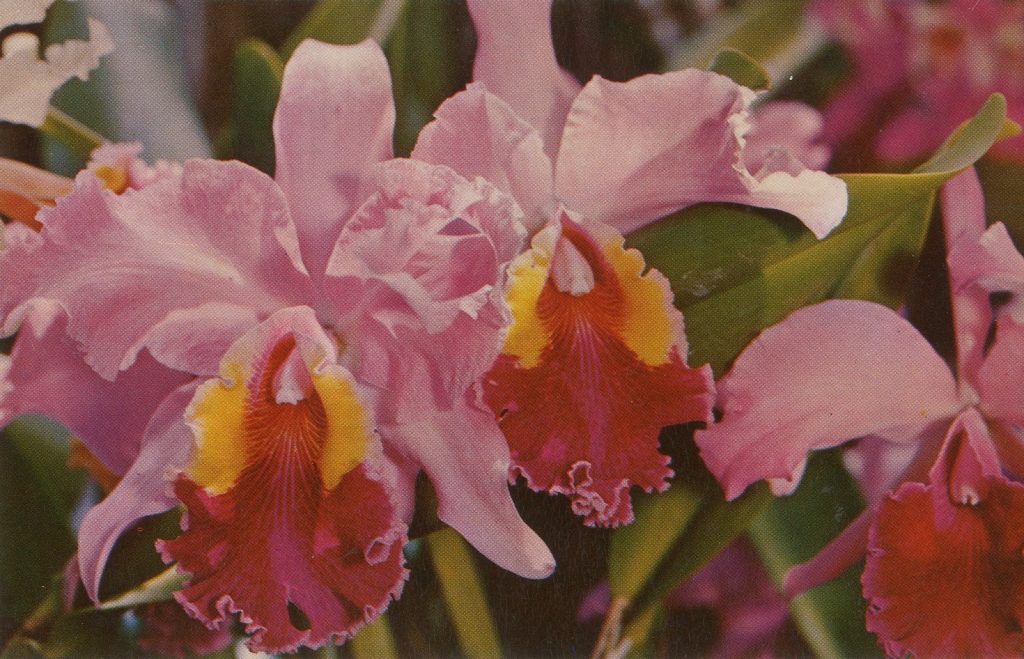
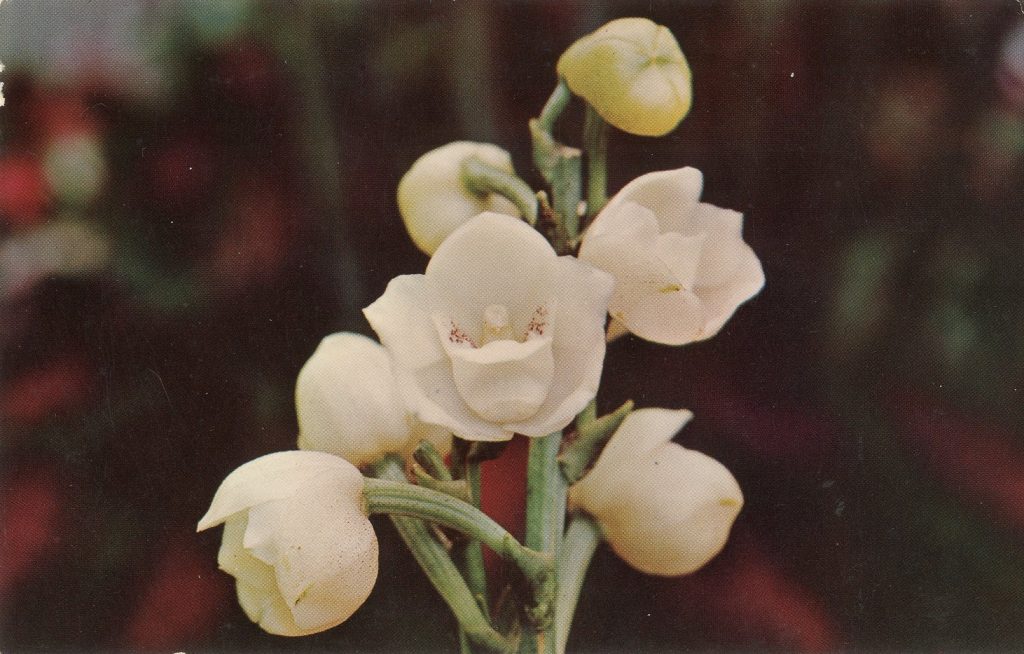
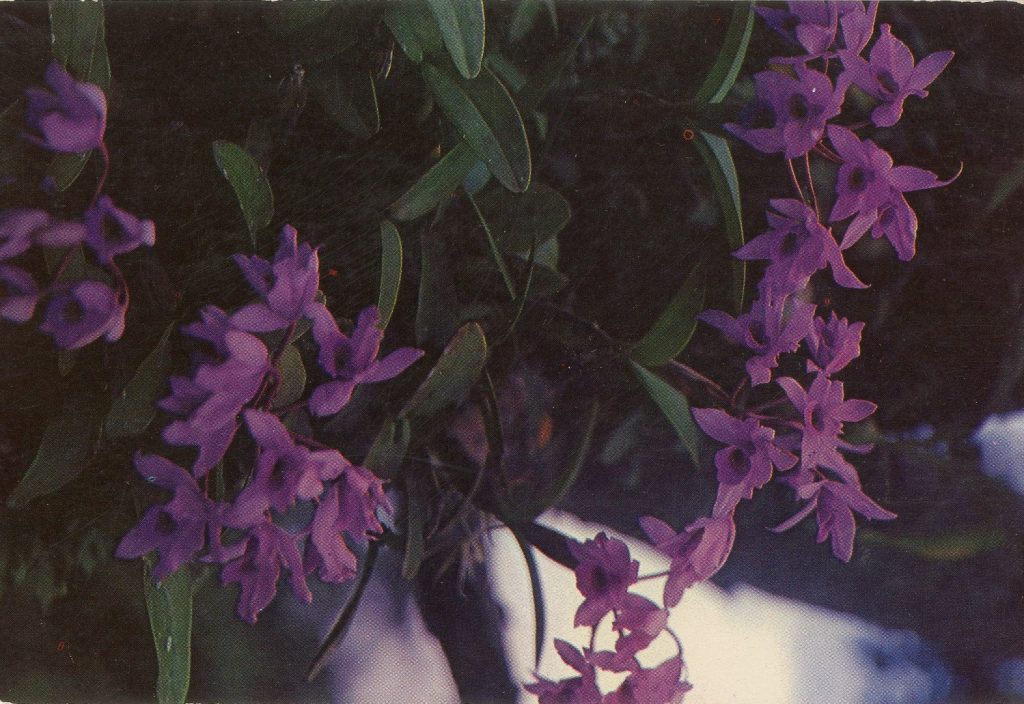
Many people mention the beautiful orchids in Panama in anecdotes and oral history interviews. I can’t help but think that Kitty would have very much enjoyed seeing them.

Taken from an article about orchids in Panama, published in the May 1970 Panama Canal Review. Stay tuned for a related blog post about Appendix 6.

Final Draft of Appendix 6, Isthmian Canal Studies 1947, 2014.133.1 -
A Real Comic Strip Character
Not many people can say that they had a comic strip character based on them, but Margaret Boonstra was one of those people.
Margaret Beshore, as she was named at the time, served as Vice Consul for the U.S. Department of State in Panama from 1961-1963. Her mother, Ellen Beshore, was a close friend of Dale Messick, the creator of the popular and long-running comic strip, Brenda Starr, Reporter. In 1963, Ellen Beshore and Dale Messick visited Margaret in Panama and toured the Canal Zone. Subsequently, Messick produced several strips over a few months about Brenda Starr’s trip to Panama and her interactions with a Vice Consul named “Maggie Shore”.
In November 2021, Margaret loaned her original copies of the comic strip and her personal photos so that we could scan them for the collection. Sadly, Margaret passed away this month here in Gainesville, Florida, so we are sharing a selection of the images to spotlight her service with the Embassy and her role in the comic strip.

Brenda Starr, Reporter comic strip featuring Brenda Starr arriving at the Panama Canal 
Brenda Starr, Reporter comic strip featuring Maggie Shore (Margaret Beshore). Note the accurate depiction of Front Street in Colón. 
This comic strip includes a caption written by Margaret that identifies the characters based on her mother, Ellen, along with “brother + sister-, + Brenda”. Margaret’s character named Maggie Shore is featured in the panel on the right. 
Margaret Beshore, 1962 
Ellen Beshore (left) and Dale Messick (right), 1963 Margaret joined the State Department as a Foreign Service Officer and started in the position of Vice Consul in Panama in January 1961. She oversaw immigration visas and worked closely with West Indian and Cuban people who were seeking to immigrate to the U.S. Margaret made the most of her time in Panama by exploring the region and even taking part in an amphibious landing exercise and a cross-country trek with the U.S. Army Jungle Warfare Training Center (among the first group of women to do so through the Center). She also met her future husband while in Panama: Clarence Boonstra was political adviser to U.S. Southern Command at the time, and later served as Ambassador to Costa Rica in the late 1960s.

Margaret Beshore participating in a U.S. Army Jungle Warfare Training Center exercise along with other women at Fort Sherman, Canal Zone, circa 1961-1963 
Margaret Beshore and Adelaide Lepingwell participating in Jungle Warfare Training Center exercise, circa 1961-1963 Did you know or work with Margaret during her time in Panama and the Canal Zone? Did you take part in the Jungle Warfare Training Center exercise with her? Did she help you with your immigration process? Did you read about “Maggie Shore” in Brenda Starr, Reporter? Do you know of other comic strips featuring characters based on people from Panama and the Canal Zone? We would love to get your comments.
-
Capturing the Canal Zone in Time Capsules
We want to highlight a generous donation by Randy and Joella Deakins of three family time capsules to the Panama Canal Museum Collection. The list of contents includes documents, photographs, letters, a scrapbook, and other items documenting the Deakins family history in Panama and the Canal Zone, beginning in 1927. These will be kept in our environmentally controlled storage facility, safe from any temptations to sneak a peek before time is up. Set to be opened in the year 2106, they are sure to bring delight to those lucky enough to witness it.
Randy and Joella also sat down with us for an oral history interview earlier this year at the Panama Canal Society Reunion in Orlando, FL. Their interview is currently being transcribed, and will be available online once it is processed. Please check out the Oral History Program on our website (https://ufdc.ufl.edu/ohpcm) and reach out to us if you are interested in participating.

In August 2021, Randy and Joella made the trip to the University of Florida to drop off their family treasures. They are pictured here with the time capsules in our Albert H. Nahmad Panama Canal Gallery. The gallery is home to an annual exhibition. Currently on display is “Are We Next: Fear and Social Roles in WWII”. (Abbreviated Online Exhibit: https://exhibits.uflib.ufl.edu/AreWeNext/) 
The Deakins Family 100 Year Time Capsule. Includes personal papers, letters from family, and papers regarding the Panama Canal Treaty and the transfer of the Canal. Time Capsule sealed April 29, 2006. To be opened on April 29, 2106. Steel box. This is #2 of 3 time capsules made by Randy Deakins. 
Violet S. Deakins: Scrapbook of her life in the Panama Canal Zone. Starts: January 1936. Last Date: January 1963. Violet Deakins born June 7, 1913 and died May 12, 2004. Time Capsule sealed August 8, 2021. To be opened on August 8, 2106. This is #3 of 3 time capsules made by Randy Deakins. 
The Deakins Family Panama Canal Zone Connection from 1927 to 1984. 100 Year Time Capsule. Time Capsule sealed January 28, 2006. Papers and photos of life in the Canal Zone. To be opened January 2106. PVC pipe. This is #1 of 3 time capsules made by Randy Deakins.
Thank you to Randy and Joella and to all our wonderful donors! Keep them coming!
You May Also Like
Champagne Complex

Updates and Introductions: Lauren O’Neill
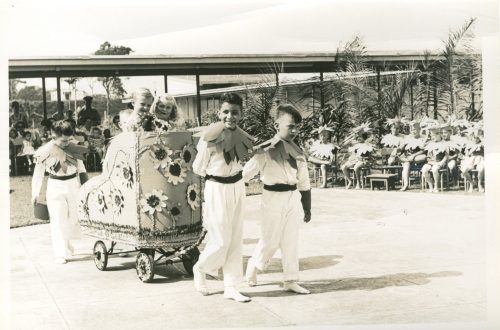
Kids in the Canal Zone
-
Honoring Important Canal and Canal Zone Workers
In honor of the first International Day for People of African Descent, we celebrate the extraordinary contributions of the thousands of West Indian workers and others of African descent who have participated in the construction, maintenance, defense, and operation of the Panama Canal and the Canal Zone. Between 55,000-100,000 West Indians went to Panama during in the 19th and early 20th century, and they were the largest group employed on the construction of the Canal. Although some people returned to the countries they had left, many stayed in Panama to create homes and families. They became an integral part of the work forces and communities in Panama and the Canal Zone. Today is a day to highlight the important role they played in this incredible history.

Workers pull a rope in the Balboa Dry Docks with the ship Reina del Pacifico in the background 
Culebra Cut, Culebra. Steam Shovel loading rock, March, 1911 
Panama Canal Review, October 2, 1953 
Group picture in front of Supply Department Main Office, 1950s 
Miss Emily Butcher, music supervisor, conducts a third grade class in rhythm, while Walter Oliver and Alford E. Osborne observe. Paraiso Elementary School, Canal Zone, March 12, 1954 (Available in the Digital Library of the Caribbean, https://www.dloc.com/PCMI013240/00001/33x) 
Women selling bananas at Culebra, Early 20th century 
Wedding party in 1913 in Culebra, Panama Canal Review, May 1965 
Driving Concrete Piles, Mindi Dock C.Z., During World War II, July 1942. To learn more about the International Day for People of African Descent visit the United Nations website page: https://www.un.org/en/observances/african-descent-day
-
Hitting the Links

Caribbean Yearbook, Cristobal High School, 1925 http://ufdc.ufl.edu/UF00093680/00012 Golf was a part of the Canal Zone from very early on as you can see in this photo from the 1925 Cristobal High School Yearbook. Playing golf right next to Gatun Locks looks like an incredibly unique experience. So does the daredevil player’s path at Miraflores Locks seen in Life Magazine.

“The Panama Canal”, Life Magazine, November 6, 1939 (2004.038.011) This golf course “hazard” is exclusive to the Canal Zone. Did you ever walk across the lock gates to play golf?
For the more faint of heart there were many other golf courses to choose from. Here are a few others described in the Canal Zone Government Civil Affairs Bureau 1973 booklet “Recreation in Panama”, pictured in the Panama Canal Review, and remembered through a score card.
Canal Zone Government Civil Affairs Bureau 1973 booklet “Recreation in Panama” (2002.030.009) 
Canal Zone Government Civil Affairs Bureau 1973 booklet “Recreation in Panama” (2002.030.009) 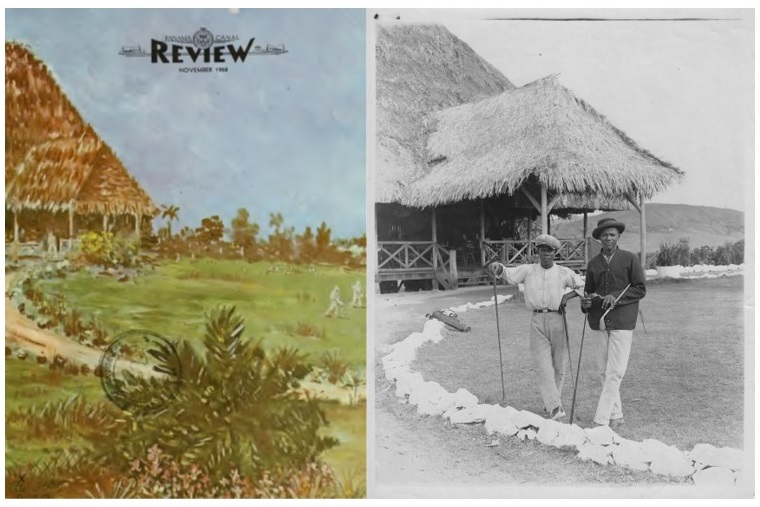
Panama Canal Review, November 1968, Photo of the Panama Golf Club, 1928 (2004.007.001)
“The painting on the cover of this issue of The Panama Canal Review shows an area of 50th Street in Panama City during 1925. Today [1968], this region is part of the Panama Golf Club. The original painting is the work of Louis Celerier, a retired professor who lives in Longview, Tex. Celerier is French by birth but is a naturalized citizen of Panama.”
Score Card for Amador Golf Club, II.2019.999.507 What was your favorite course? Which course was the most difficult? Which course was the most picturesque?
-
Carnival!
Although Panama is without the usual sights and sounds of Carnival this year because of the pandemic, these photos showcase the spectacular excitement that the events have provided for viewers and participants alike with parades, floats, queens, dancing, and costumes. Did you ever participate in a Carnival parade? Did you have a favorite float or group? What were your favorite Carnival traditions?

Panama Canal Carnival Float, 1952 
Carnival participants in traditional costumes (date unknown) 
Chinese float, Carnival (source: Panama Canal Review, November 1965) -
This day in history: Completion of the Panama Railroad
Just after midnight on January 27, 1855, the final spike for the Panama Railroad line was driven at Culebra, which was known as Summit at the time because it was located at the summit of the Continental Divide. The completed railroad was single-track and stretched for about 47 miles (76 km) between Panama City and Aspinwall (later named Colón). The following day, on January 28, a train crossed the Isthmus for the first time.

Cover of Panama Canal Review issue dated January 28, 1955 celebrating centennial of Panama Railroad opening in 1855. With the completion of the 5-year construction project, the Panama Railroad became the first transcontinental railroad in the Americas. In 1955, the centennial of the opening of the railroad was celebrated in the Canal Zone with a special commemorative trip.

Caption: Commemorative Trip, 100th Anniversary of completion of Panama Railroad, First Transcontinental Railroad in the Americas. Mt. Hope Railroad Station, Canal Zone, January 28, 1955. -
The Canal Zone – Then and Now / “A Land Divided, a World United”
Thanks to Joe Wood for sharing this interesting video with the PCMC team!
The video description reads, “This publication covers 150 historical photos (Then), in black and white, from 1904 to 1941 and include their original titles. The images recall the lifestyle of some villages and sites on the Pacific side of the Canal Zone such as Albrook, Ancon, Balboa, Balboa Heights, Clayton, Corozal, Diablo, Fort Amador, Gamboa, La Boca, Madden, Miraflores, Paraiso, Pedro Miguel and Summit. All current (Now) color photographs were taken this year (2016).”
Video posted to YouTube by Jaime Massot